Introduction:
At a retreat which I attended in 1976 to learn about opportunities for overseas teaching placements, a social activist in Vancouver who was also a ‘returned volunteer cooperant’ who had taught in Nigeria, surprised me with his candour. In a private moment towards the end of the evening, after earnest discussion of ‘development issues’ had given way to rum and Reggae, he said:
“Well, if you really still want to teach in an African school–– better just think of yourself as a tourist. Africa can do without any more mercenaries or missionaries!”
Although jarred by what seemed a taunt––I was not dissuaded. Thereafter I spent nearly 10 years in African secondary schools, sponsored by Canadian non-government development aid organizations. ‘Volunteer cooperant’ remuneration, incidentally, was much too lowly for me to be ever accused of a mercenary motive…
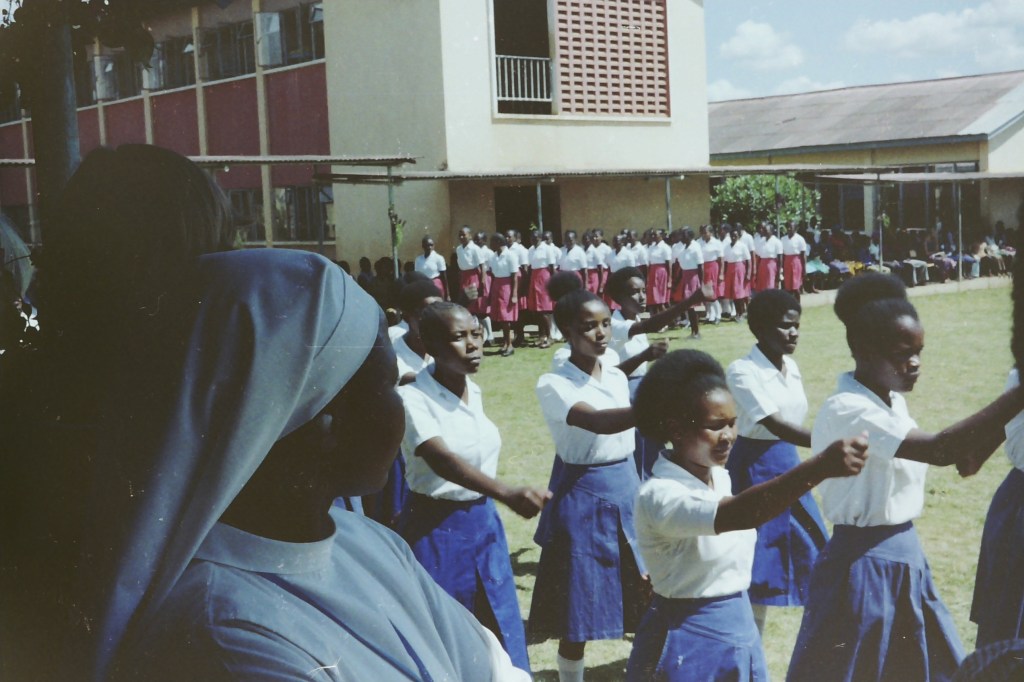
As far as my avoiding the missionary label: there was no getting around the fact that virtually all secondary education, prior to independence of former British colonies, was established by missionaries. Working within mandates that emphasized rural development, I had no choice but to work in rural schools founded by religious orders. Despite having no religious affiliation, I taught in four mission schools in Tanzania and Zimbabwe: three Catholic and one Methodist. Since all these schools also operated as government institutions with standard curricula, neither teachers nor students were bound to the particular faith–– though many in residence willingly were…
Still, one may ask: did mission schools in Africa not suppress and demean local culture in a manner similar to the notorious residential schools of northern Canada? While “survivors” of North American residential schools certainly have justification to suppose so––most alumni of African mission schools would probably disagree. Indeed, even African anti-imperialist firebrands like Zimbabwe’s Robert Mugabe were grateful to the missionaries of their early tutelage…
Perhaps that appreciation of western education––however implanted along with the mustard seed–– is testimony to the robustness of African culture. With so few European settlers following the trail-blazing missionaries, a populous Africa was largely able to assimilate Christianity and make it her own–– just as in an earlier era Africa had assimilated Islam…
The following are a few encounters in African missions from the ‘70-‘80s, which I found striking enough to note down in some detail. Hopefully, the vignettes might suggest ambiguities that are at odds with certain stereotypes…
–FWT (lefthook51)
January 2020

 Coprolites in Amber (etc.)
Leave a comment