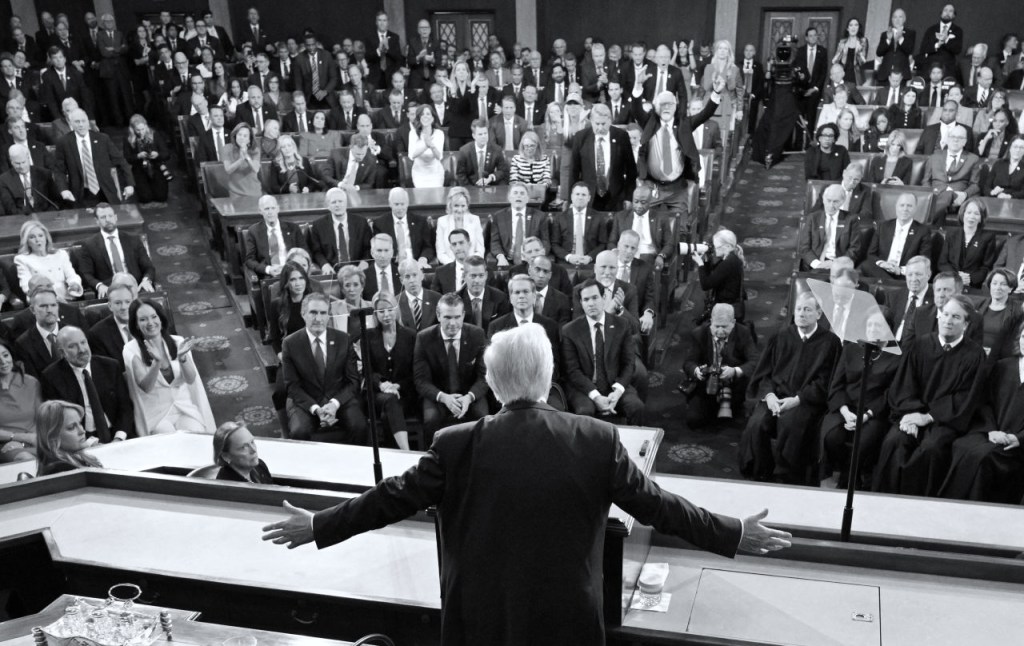
In just three months, the harm wrought by the Trump administration has already surpassed the most pessimistic forecasts before his re-election. Never in living memory have the worst American tendencies been so unrestrained. Amid the shock and awe of the Project 2025 juggernaut–– never has the political opposition been so feeble. Never has American media, law firms and universities been so cowed by authoritarian bullying.
If a compendium of American ‘Profiles in Cowardice’ were to be compiled by contemporary historians, it would be too voluminous to fit under one cover. I would venture that a chronicle of cowardice thus far in 2025 alone would require an entire volume. Such annals of complicity in evil would extend far beyond enabling politicians–– but they would have to be prominently featured…
Few acts of cowardice are more bizarre than the demonstrations of fealty to Trump by Republican members of the US congress. Among recent examples has been the legislative proposal by Florida’s Anna Paulina Luna for: ‘carving of the figure of President Donald J. Trump on Mount Rushmore…’
Such obsequiousness is hardly surprising for young zealots who has quaffed MAGA Kool-Aid since their teens. They may be craven fools–– but they are not hypocrites. Older ‘traditional’ Republicans reborn as Trump sycophants are more deeply and more damningly shameless.
Least surprising in the gallery of shame is the billionaire class. Indeed, the rich have always expected to grow richer under Republican administrations. A few of them were initially squeamish about the rowdiness of the MAGA Republican takeover. Yet they soon donned MAGA hats in the assurance that for all his populist yammer–– Trump will lower their taxes and strip away pesky business regulations. This time, Trump tariffs may doom their gamble–– but the rats have yet to jump ship.
It is neither surprising that ‘traditional’ GOP politicians are loyal trumpeters of the MAGA gospel. They have abandoned free-trade, fiscal responsibility and neo-con globalism with mental contortions that defy Jedi mind-tricks. No worry about being tripped up in contradiction––in the age of Trump–– truth and integrity is for losers.
For senior senators nearing the end of long tenures (more likely ending by death than by retirement) prostration to Trump seems particularly cowardly. One might consider former GOP senatorial leader Mitch McConnell. He initially denounced Trump on the senate floor for orchestrating the January 2021 mob attack on the capital. Yet a few weeks thereafter, Mitch voted ‘no’ vote on impeachment–– effectively carrying along other Republican votes which would have blocked the MAGA Messiah’s resurrection. Even though Trump went on to taunt “the broken old crow” (along with his wife, “Coco Chow”), the octogenarian endorsed Trump’s 2024 candidacy.
Replaced as GOP leader in 2025 and nearing retirement, the elder ‘statesman’ was the sole Republican to vote against Hegseth, Trump’s Secretary of Defence––whose corruption is only exceeded by his incompetence. Yet that vote was cast only after knowing that the confirmation was assured. It seemed as if Mitch believed that one pathetic gesture of ‘independence’ could salvage a forty-year reputation of cynical maneuvering. It might he said that Mitch could not be accused of selling his soul–– only by never having one to sell. He is not alone. There at least a half dozen other old GOP senators who are equally cynical and craven (Chuck Grassley, Lindsey Graham et. al.)
As a septuagenarian myself, I wonder what really lies in the hearts of such old men. I do not suppose them to be entirely unreflective. They may well believe, in the peculiarly American manner, that their worldly actions are judged by “a higher power.” In that regard, they must recognize that a final judgement is neigh.
Still, I wonder whether they ever wake in the middle of the night in trepidation not of the divine––but of the earthly judgment. I wonder whether they ever doubt that they are on the right side of history. Doubt in immortal souls aside–– how can anyone be at ease in the possibility of being on the wrong side of history?
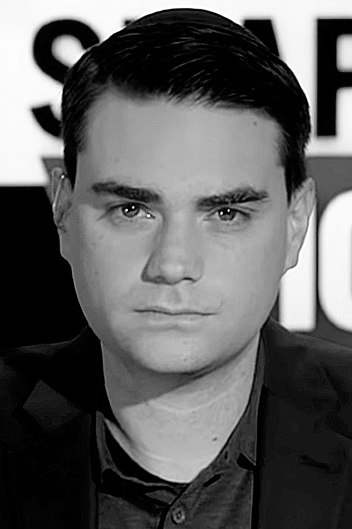
In a recent Google search of articles relating to ‘the right side of history,’ the uppermost links that appeared were to the title of a 2019 book by American podcaster, Ben Shapiro. The fact that a provocateur of the far right can also be a New York Times bestselling author suggests more about the reach of the manosphere than about literary merit.
In his book, Shapiro apparently claims that western civilization–– the apogee of human attainment–– owes its greatness to “Judeo-Christian values” and “the Greek gift of reason.” That precious inheritance he believes to be most gloriously manifested in the American Declaration of Independence. Yet he despairs that America has strayed far from its founding ethos. Unsurprisingly, he makes the case for a rejection of the rootless secularism of the left coupled with a fervent embrace of traditional values of the right…
Admittedly, I gathered that summary from book reviews and a few short excerpts. I was not inclined to fully engage with the writing of a proud Islamophobe who once sneered: ‘Israelis like to build. Arabs like to bomb crap and live in open sewage…’ A fervent supporter of Trump, he has recently called for the pardon of white cop, Derek Chauvin, the convicted killer of George Floyd. Plainly, charity is not compatible with the Ben Shapiro interpretation of Judeo-Christian values.
Astonishingly, that young man arrogates to those like himself the defence of values which supposedly plant them squarely on the right side of history. If such reactionary ‘values’ continue to prevail in America–– what darkness lies ahead for the rest of us? What future will our grandchildren face?
One cannot resist imagining the future after one’s disappearance from it. Yet amid the dark omens, I try to hold faith that progressive values will continue to be championed by a few courageous voices. Lately, I have been inclined to look for hope rather more in public figures of the past than in those of the present…
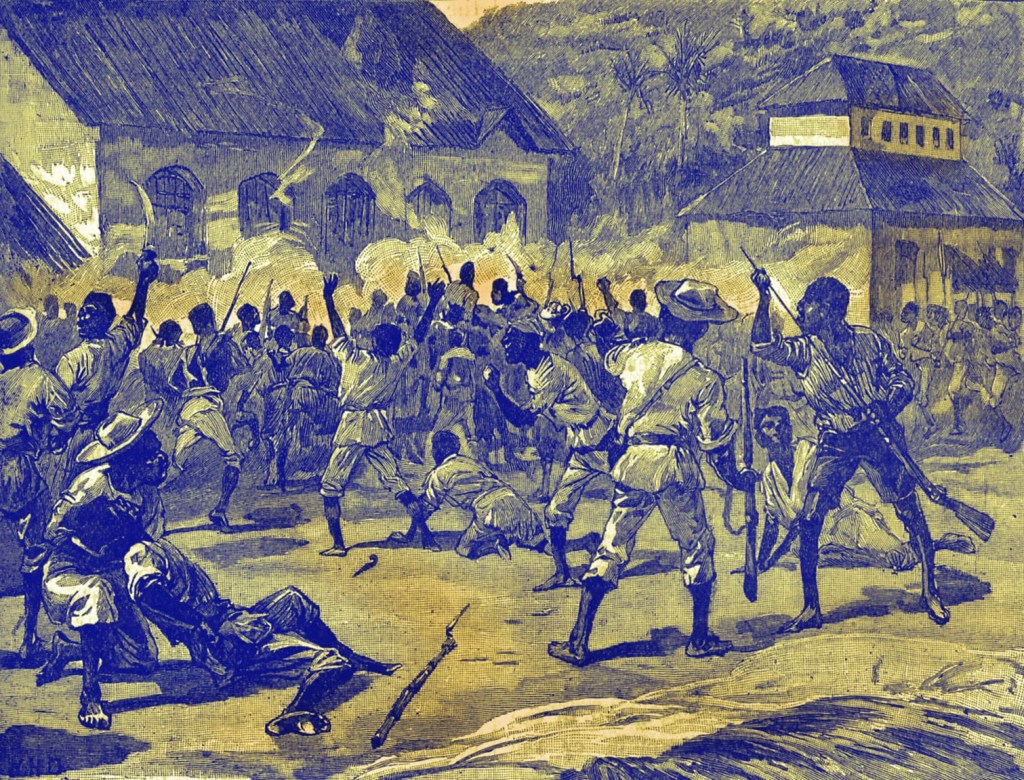
An inspirational moment of history that has come back to my mind recently, occurred in Victorian Britain nearly one hundred and sixty years ago. It involved conflicting interpretations of justice arising from a rebellion in what was then, the colony of Jamaica.
Much has been written about the historical significance of the Morant Bay Rebellion and its aftermath. I was first drawn to the story decades ago through a biography of John Eyre–– the British governor at the center of the controversy. My interest was renewed by a discussion of the event in a recent podcast in the BBC’s ‘In Our Time’ series.
Roughly summarized, the rebellion was sparked by a confrontation in October 1865 at a courthouse in semi-rural Jamaica. Sugar plantation labourers and local leaders had marched there to air grievances against white landowners. Backed by the British colonial administration, white planters typically imposed harsh penalties on sugar-cane cutters for petty offences (e.g. floggings for stealing food). When a colonial militia attacked the protestors, anger turned to bloodshed. Before a wider unrest was quelled, nearly three hundred and fifty black Jamaicans were arrested and more than four hundred and fifty were killed. The death toll of whites was less than twenty.
When news of the rebellion reached Britain, the reaction was somewhat mixed. Jamaica had a long history of slave rebellions. The bloodiest, led by a slave called ‘Tacky’ in 1760, was put down with an even heavier hand than Governor Eyre used to smash the Morant Bay uprising. Yet gradually, from the time of abolition of slavery in the empire in 1833, more Britons were beginning to acknowledge that former slaves in faraway colonies were still British subjects. Not surprisingly, the greater sympathy for harshly treated black labourers in Jamaica was among the British working class.
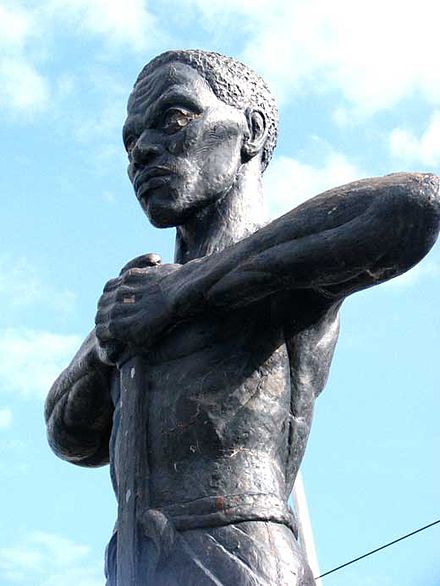
Eyre’s sentencing of the leaders of the protest was especially controversial. Paul Bogle, a preacher, and George Gordon, a mixed-race member of Jamaica’s legislative assembly, were popular figures on the island. They were known as fighters for social reform. Ignoring strong appeals–– Governor Eyre had both charged with inciting a riot. Along with several others, Bogle and Gordon were subsequently hung. Black Jamaicans wanted Eyre tried for murder.
In Britain there was considerable sympathy for Governor Eyre. Many presumed that by restoring order, Eyre had honourably done his duty. In that view (prominently held by the middle class), he had prevented Jamaica from becoming another Haiti. In the mid-1860s, that ill-fated Caribbean republic was already notorious for social chaos.
Others knew of Eyre’s achievements in his early career. He had immigrated to Australia in his youth where he prospered as a farmer. He then set out on a number of expeditions to terra incognita in the Australian interior. Accompanied by Aboriginal guides, he was the first European to trek across the vast Nullarbor desert. Despite not being of the usual upper-crust background of colonial administrators, he was later appointed to governorships first in New Zealand and then in Jamaica. Some historians claim Eyre was ill-suited to those roles. Some of his contemporaries claimed he was thin-skinned and stubborn.
In 1866, two opposing committees were formed in London: one petitioned for Eyre’s arrest and prosecution while the other rallied to his defence. Among the members of both committees were leading intellectuals of the era:
The Eyre Defence and Aid Fund’ was led by essayist and historian, Thomas Carlyle. Other members of the committee included Alfred Lord Tennyson, John Ruskin, Charles Kingsley and Matthew Arnold. All those literary luminaries shared a conservative disposition. Yet ‘liberal’ Charles Dickens was also a member.
Readers who know Dickens as an advocate of social reform might be initially taken aback by his stance on the Eyre case. I certainly was––before reminders of the sharp line he drew between liberal reform and radical upheaval. For example, Madame Lafarge in ‘A Tale of Two Cities’ left no doubt about Dicken’s horror of revolution. Moreover, Dickens’ advocacy in uplifting the poor at home probably left little room for attention to the myriads of them overseas…
There is little likelihood that Dickens disagreed with the conservatives on the committee about the core issue of the Eyre case. That was the presumed threat to civilized values posed by ‘uncivilized’ disorder. The committee went further in their defense. They built up Governor Eyre not only as a defender of civilized values but even as a protector of (white) womanhood threatened by mob savagery…
In 1866, the term ‘racism’ had yet to enter the English vocabulary. Yet there was a strong undercurrent of that in the Eyre defense. In the Victorian era, “the coloured races” were widely held to require the paternalistic oversight of the ‘superior’ European races. That belief conveniently provided moral justification for colonial rule. When the immature colonial subjects got out of line––the fatherly hand was sometimes forced to be sternly applied. In that mind-set, martial intervention to protect the white minority in Jamaica was deemed both politically necessary and morally justifiable.
The sense of higher obligation to protect a hierarchical social order was reflected in a message sent to black Jamaicans by Queen Victoria Herself. The petitioners who pleaded for her help in addressing their grievances were urged to advance their prosperity by “working harder to make the plantations more productive.” Although the ‘Queen’s Advice’ was penned by the West India colonial office, anecdotal reports leave no doubt that Victoria’s sympathies were with Governor Eyre.
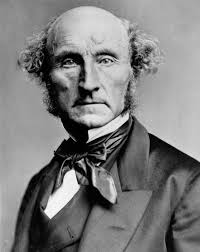
Pitted against all that imperial righteousness was the Jamaica Committee. Its members tended to a progressive view of human nature in which race was not at the forefront. That more relativistic understanding of humanity was at the heart of their critique of extralegal imperial authority. The Jamaica Committee believed that Eyre’s imposition of martial law, imprisonment of many Jamaicans and execution of leaders of the rebellion were illegal actions. They demanded that Eyre be tried for “high crimes and misdemeanors.” Specifically cited in their case was the unconstitutional executions of Gordon and Bogle.
The Jamaica Committee was headed by John Stuart Mill. The eminent philosopher was not strictly opposed to colonialism. In his early days, Mill had worked as a colonial administrator in India. He was, however, opposed to rapacious capitalism. He would not have agreed that most blacks in Jamaica in 1866 were equally ‘civilized’ as most whites. Yet most significantly–– he held that all had the potential to be. That view is somewhat reflected in his seminal work, ‘On Liberty’ (1859). Among the enduring principles espoused therein is the necessary balance of governmental authority for the utilitarian good of all with the rights of individuals. On principle, such rights could not be denied colonial subjects––whatever their skin colour or whether they were former slaves.
Mills and Carlyle had earlier clashed over slavery. In 1849, Carlyle published ‘Occasional Discourse on the Negro Question’ ina popular literary journal. He argued that blacks under benevolent slave-masters were better off than poor whites in England’s “dark satanic mills” (to use William Blake’s nightmarish image). Mill’s rebuttal to Carlyle was published in the following issue of the same magazine. He criticized Carlyle’s hierarchical view of human nature while stressing the incompatibility of slavery with a just society. Meanwhile, Carlyle’s vile essay was widely circulated in America in pro-slavery pamphlets–– with the word ‘negro’ changed to a racial slur.
Sixteen years later, Mills and Carlyle publicly clashed again over appropriate justice for John Eyre. Mills was joined on the Jamaica Committee by prominent academics, philosophers and scientists. Among the renowned were Goldwin Smith, Charles Lyell, Herbert Spencer, Thomas Huxley and Charles Darwin.
The two committees forwarded legal arguments based on interpretations of justice which rested upon fundamentally opposing ethical principles. The defenders of Eyre argued that the constitutionality of laws applied differently at home than in colonial governance. They claimed that the actions taken by Eyre under martial law were justifiable for restoring order in Jamaica after the rebellion. In opposition, the Jamaica Committee articulated that British law applied equally to citizens under colonial governance regardless of race. They maintained the grievances of black Jamaicans, even if some were ungrounded, deserved to be addressed in a judicious manner.
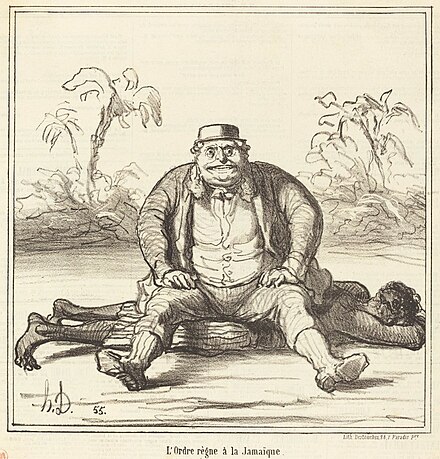
In 1866, the case was presented to a grand jury. The proceeding did not find sufficient cause for indictment. Eyre did not have to face charges. In the court of public opinion, Carlyle’s committee won the day…
That outcome was probably determined by contributing factors beyond the case itself. One such factor was the Indian Rebellion of 1957––much bloodier and more widespread than the later revolt in Jamaica. The so-called ‘Indian Mutiny’ nearly resulted in the loss of the Indian subcontinent to British imperial domination. With limited information about the sociopolitical causes of the rebellion, many Britons had the impression that the unruly Indian natives required stricter colonial governance. That ‘lesson’ was certainly in mind at the time of the Eyre controversy.
Much more in the British public mind in 1866 was the end of the American Civil War with the defeat of the Confederacy (supported at the outset by Britain) just the year before. The emancipation of slaves in all former slave-holding states took something of the moral urgency away from the cause of abolitionism and the support of former slaves. The Eyre controversy, as historian Sarah Winter put it: ‘was a kind of cultural referendum on the aftermath of the abolition of slavery…’* It seems that for many Victorians, the implicit question was: ‘Is it fair that negros, having been ‘given’ their freedom, should demand social equality with whites?’ Apparently, the majority opinion was ‘no.’
In the short term, the reputation of Governor Eyre was salvaged. However, in the longer term, he did not fare so well. In recognition of his explorations in Australia, his memory does endure in a few placenames and statues there. If Eyre is remembered at all in the United Kingdom, it is only for his role in a darker chapter of colonial history.
In Jamaica there are several monuments to the Morant Bay Rebellion. Likenesses of Bogle and Gordon appear on Jamaican currency notes. Both are portrayed as heroes in the movement towards independence. In Jamaica today there is certainly no doubt about which of the two committees in the 1866 Eyre controversy were on the right side of history…
In commenting on his participation in the committee which opposed Eyre, Thomas Huxley wrote: ‘Men take sides on this question, not so much by looking at the mere facts of the case, but rather as their deepest political convictions lead them…’
Huxley, known by his contemporaries as “Darwin’s bulldog”–– like his great mentor–– had political convictions that were remarkably progressive for his era. Darwin himself was still defending ‘On the Origin of Species’ (1859) against the ire of creationists when he took on political controversy by joining the Jamaica Committee. Just as he was visionary in his science–– he was forward-thinking in his convictions about social justice.
What struck me in first reading of the Eyre controversy was the divide between the ‘men of science’ and the ‘men of letters’. The former were prominent in the Jamaica Committee while the latter were dominant in the Eyre defence. There were notable exceptions––such as the physicist, John Tyndall, on the defence committee, and J.S. Mill, with his broad education in the classics, leading the opposition. There were also Christian abolitionists on the Jamaica Committee. Still, I find the pattern of progressive-minded scientists versus conservative-minded literati the most interesting aspect of the Eyre controversy…
Perhaps the deeper divide is religious. There was strong support of the black Jamaicans from the British abolitionists, whose first leaders (notably William Wilberforce) were non-conformist Christians. By the mid-1860s, Christians in Britain–– unlike many of their fellows in the American south–– generally accepted that slavery was evil. Still, most had yet to equate the ‘spiritual’ equality of black people with their right to social equality.
There is much evidence that the eminent Victorians on both sides of the Eyre controversy wrestled with religious doubt. One can assume that those immersed in science were more directly guided by empirical reasoning than were their counterparts in letters. Figures like Mills and Darwin had to be cautious about expressing public doubt about traditional Christian belief. Yet undoubtedly their political beliefs––just as their monumental work in science and philosophy––was grounded in reason, not in religion. Also noteworthy was that Darwin and Mill both supported gender equality. They were giants–– far ahead of their time…
Conversely, the stature of writers whom (as an old English major) I once admired, have shrunk in my esteem. I will always acknowledge the greatness of poems like ‘Dover Beach’ or ‘Crossing the Bar’. However, I can no longer read them without being reminded that Arnold and Tennyson joined the vile Carlyle in the Eyre defense. Granted, the religious sentiments of these poets were intellectually complicated. Whatever their internal conflicts––they were socially conservative. Their politics seemed to reflect the High Anglican airs of Victoria Herself… A dominance of Judeo-Christian values, perhaps?
My latter-day view of Thomas Carlyle is far less generous. The Victorian titan of letters was not only an unapologetic supporter of slavery but was deeply critical of democratic rule. His 1841 work, ‘On Heroes, Hero-Worship, and the Heroic in History’ was to be lauded in Germany ninety years later by the ‘heroic’ Fuhrer himself. Since then, the Victorian ‘sage’ has been widely viewed as a pompous ass. That is–– until quite recently…
‘Not all humans are born the same, of course, and Carlyle (following Aristotle) takes the view that the innate character and intelligence of some is more suited to mastery than slavery. For others, it is more suited to slavery…. We thus observe the Carlylean view that slavery is a natural human relationship, like marriage…’
That quote is from an American blogger whose dark musings could be ignored were he not avidly followed by some of America’s most powerful players in the Trump era. The Silicon Valley billionaire ‘tech bros’ who were seated closer to Trump at his inauguration than his cabinet nominees, regard Curtis Yarvin (AKA, ‘Mencius Moldbug’) as a visionary. Vice President Vance and even ‘co-president’ Elon Musk, are admirers.
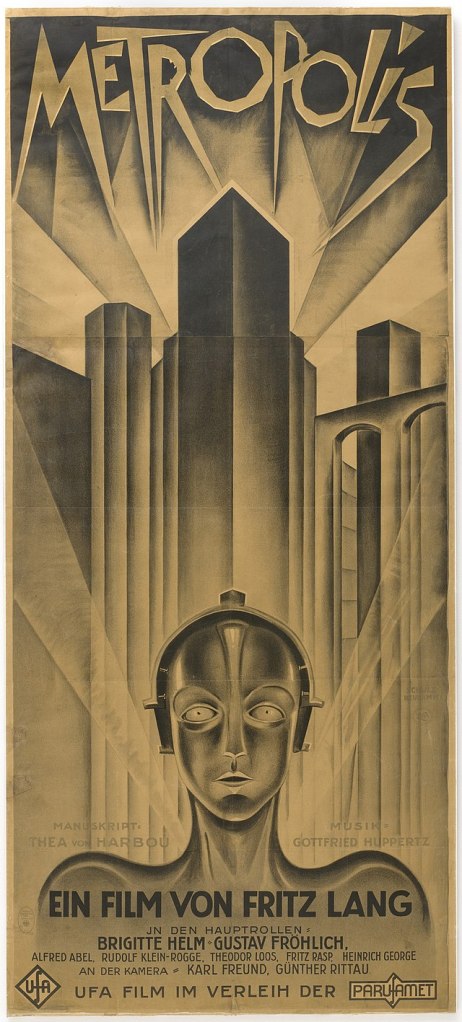
The future envisioned by Yarvin and fellow proponents of the so-called ‘Dark Enlightenment’ harkens to Fritz Lang’s 1927 dystopian film, ‘Metropolis’––albeit one based in twenty-first century AI technology. Yarvin’s brave new world would be ruled by a technocratic elite headed by a post-modern Caesar. In interviews, Yarvin is evasively ambiguous –– but plainly contemptuous of democracy and pluralism. It is hardly surprising that he regards Thomas Carlyle among the prophets of his neo-reactionary vision.
It is unlikely that the would-be Caesar of the present has ever heard of Yarvin. Still, the speed at which Trump and his minions have set out in uprooting pluralistic democracy has probably exceeded the expectations of the Dark Enlightenment ‘thinkers’.
Granted unrestrained power, Musk and his DOGE team of pimply geeks have nearly completed their digital gutting of the federal government. Budgets of departments have been decimated while entire agencies such as USAID, have been shuttered. Apparently by cancelling malaria eradication programs in Africa, America is saved from “civilizational suicidal empathy”–– the danger of ‘foreign aid’ in the dark MAGA zillionaire’s own words.
Meanwhile, Trump appointees––the red guards of the MAGA cultural revolution–– are scrubbing government archives. References to slavery, racism or civil rights is being white-washed or erased. In the zealous absurdity of the process–– apparently a tribute to the Hiroshima bombing plane, ‘the Enola Gay’, was accidentally purged. Undeterred by sloppiness, the reshaping of official records to reflect only a ‘good America’ continues.
Nothing Trump has done so far has probably more pleased the Dark Enlightenment visionaries than his start in bringing to heel ‘the Cathedral’ of liberal elitism–– i.e., the universities. He threatens to punish institutions which tolerate pro-Palestinian protest. He demands that universities abolish “anti-American” curricula and offer courses that emphasize “patriotism.”
Fearing a loss of government funding, Columbia has already caved. The board has agreed to effectively close their Middle Eastern Studies Department. It was no coincidence that the test case for extrajudicial detainment and deportation of foreign students was Mahmoud Khalil, a Syrian-born graduate student at Columbia. Since then, for such “terrorist acts” as posting articles with political opinions, foreign students studying in other institutions have been swept up by masked ICE agents and detained incommunicado. Whither the ‘holy’ US constitution?
What has been so disheartening has been the craven eagerness to ‘cut deals’ with Trump. Every university, law firm or media outlet that bends the knee further fuels his megalomaniacal thrill of dividing and utterly dominating ‘the enemy’. From Caligula to Mussolini–– that is how tyrants rule…
The unavoidable question is: what if some version of MAGA of the Dark Enlightenment succeeds? What if eighty years of (relative) progressivism is turned on its head? It is not inconceivable that a hundred years from now, Trump’s mug really will be carved into Mount Rushmore…
Yet on the other hand, embattled Americans might resist. They might refuse to be intimidated and take a public stand. If enough of them do so en masse, the tables can be turned.
For that, they might find inspiration in the words and deeds of heroes in earlier years of their country’s struggle for civil rights. They might take heart in the speech M.L. King delivered days before his assassination. As he so eloquently put it: “the arc of the moral universe is long, but it bends towards justice…”
It is in the spirit of that slow arc of justice that I offer this little tribute to the memory of those eminent Victorians on the Jamaica Committee of long ago. Their taking a stand on a political issue that did not affect their personal lives probably contributed little more than a paragraph to their biographies. Yet that ethical stand showed they were extraordinary human beings not just for their great works–– but for their great consciences… They are still very much on the right side of history.
-2025, April
*Quotation from ‘On the Morant Bay Rebellion in Jamaica and the Governor Eyre-George Gordon Controversy’, Sarah Winter (2012), posted in the online journal: ‘Britain, Representation, and Nineteenth-Century History’ (BRANCH): https://branchcollective.org/?ps_articles=sarah-winter-on-the-morant-bay-rebellion-in-jamaica-and-the-governor-eyre-george-william-gordon-controversy-1865-70
 Coprolites in Amber (etc.)
Leave a comment