1
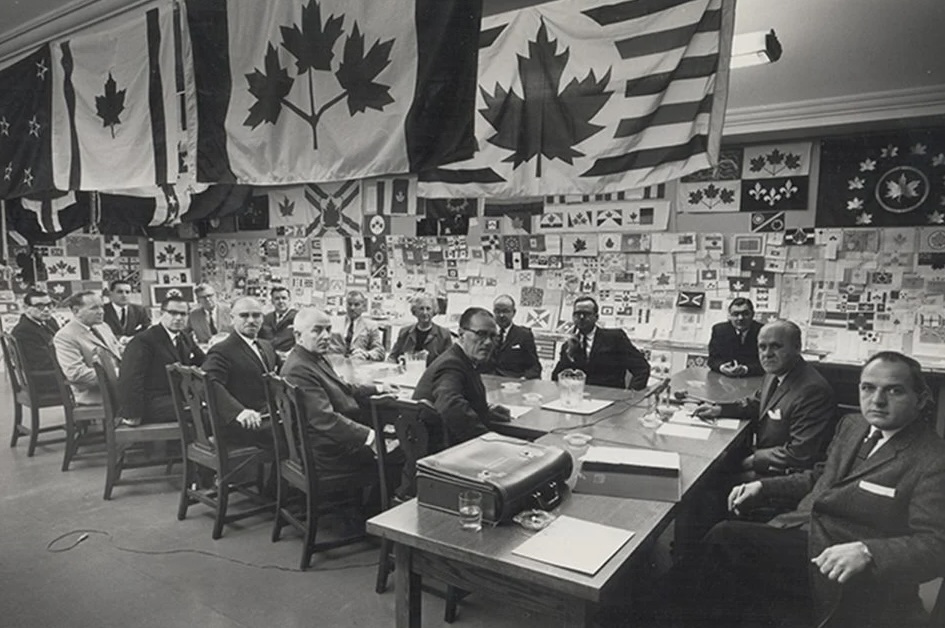
February 15th 2025 marked sixty years since the first raising of the red and white maple leaf as Canada’s official flag. Of the 24% of Canadians who are old enough to remember that day–– probably very few do.
Those whose memories stretch back sixty years or earlier are more likely to recall the controversy over the flag’s design during the leadup to its adoption. Competing designs were widely shown in the newspapers and on TV, although shades of grey could not do justice to the prospective colour schemes. Many of British heritage wanted “the flag we fought and died under” to be incorporated into the design. Meanwhile, French Canada was eager to jettison symbols of the maudit Anglais empire. When the parliamentary committee chose the maple leaf without incorporation of the Union Jack, Anglo vets (some of World War One were still above ground) were especially bitter. On the day the new flag was officially adopted–– there was less of relief than of resignation.
That was the prevailing attitude in the fiercely Tory village in southwestern New Brunswick, where I witnessed the first raising of “Lester Pearson’s rag” on February 15, 1965. Amid my Grade Eight class, I stood in front of the school where the entire student body had been hastily herded for the brief ceremony. It was a bright winter morning with an icy wind blowing into unzipped jackets.
I peered over the heads of older kids as the old ensign was lowered and the new flag raised. As soon as it fluttered from the top of the flagpole, most of the children tentatively raised right hands to brow. Several others kept their hands down––likely as told to do by parents.
I cannot remember whether I gave the new flag my left-handed salute on that morning. If I had–– it would have been in fear of my homeroom teacher–– a big-boned lady who brooked no nonsense. I do clearly remember that teacher scowling at a classmate who was hunched with his hands in pockets. Suddenly, she smacked his arm with her dowdy purse–– whereupon his hand awkwardly shot up…
It is quite possible that the progeny of that boy was among the ‘Freedom Convoy’ trucker-protesters who occupied downtown Ottawa in January 2022. Ostensibly opposing the COVID lockdowns, those truckers were not only supported by Canadians of the populist right but were egged on by MAGA cheerleaders, south of the border. One irony of that protest was that the truckers’ vehicles were festooned with the same flag which their grandfathers so bitterly denounced…
After sixty years, no one doubts that the maple leaf flag is emblematic of Canada. Yet most Canadians are not given to waving it. Our flag is fondly regarded but not fetishized–– like those which glorify blood-stained histories–– e.g. the star-studded score card otherwise known as the Stars and Stripes…
Yet since the Trump re-election, sales of the Canadian flag and its related paraphernalia has soared across the dominion. In windows, in doorways, on cars–– more flags have been in display in the last several weeks than on any Canada Day. Of course, this flourish of unusual Canadian patriotism has everything to do with the nakedness of Trump’s bullying. Perhaps we should be grateful for being jarred from the usual complacency…
In response to Trump’s tariffs, Ontario Premier Ford–– our ambassador to Fox News––initially claimed to have been shocked by: ‘a family member stabbing you right in the heart…’ I would rather his analogy had been to a stab in the back by a psychopathic neighbour. The MAGA audience should knew we were surprised by the viciousness of the attack–– but we will never be caught off-guard again…
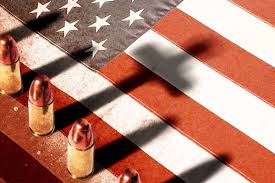
I have always flinched in hearing it crowed that “Americans are our brothers.” In culture and politics, even American cousins are a species apart. I have yet to see a Canadian beholding our flag with a crazed gleam in the eyes. I have never heard a drunk Canadian warn: ‘Cross us– and we’ll blow ya right out our fuckin’ asses!’ Such remarks not uncommonly muttered in backwater Maine more than a half-century before MAGA–– hardly raise an eyebrow today.
Of course, educated and progressive-minded Americans are not given to such nastiness. Yet even American ‘liberals’ tend to believe insaint-like founding fathers, a holy constitution and divinely granted exceptionalism. Mercifully, no such dogma of nationhood is required of Canadians.
Yet what does it mean to be Canadian apart from not being American? That age-old question is especially uncomfortable for English Canadians. From our accents to our winter parkas–– we can easily be taken as overly-apologetic Minnesotans…
As much as I rail against the evil empire, I may be a typical English Canadian in more ways than I care to admit. I pay closer attention to the politics of the imperium than do most of its own citizens. I know more of American history and literature than that of my own country. As with many of my fellow Canucks, that cultural schizophrenia extends from my earliest years:
In boyhood, I was dazzled by the USA–– the border of which was just a few miles from my home village. The banner flapping over the custom’s building was a shimmering reminder that the same flag flew over Disneyland. That ‘Magic Kingdom’ was regarded as an earthly paradise designed to give kids with cancer their last wish. While California was more than three thousand miles distant–– I imagined that duns and greys must brighten into technicolor the further one travelled south…
Yet even in a remote Maine hamlet there was exotic candy and firecrackers, unavailable on our side of the border. I was particularly fond of collectible bubble-gum cards depicting Civil War battles between legendary generals like W. T. Sherman and Robert E. Lee. Even the blood was in technicolor. Typical of Canadian kids, I knew of George Washington and Abe Lincoln long before hearing of John A. MacDonald–– “the drunk” who happened to be Canada’s first Prime Minister. Having no heroes was supposedly a uniquely Canadian virtue…
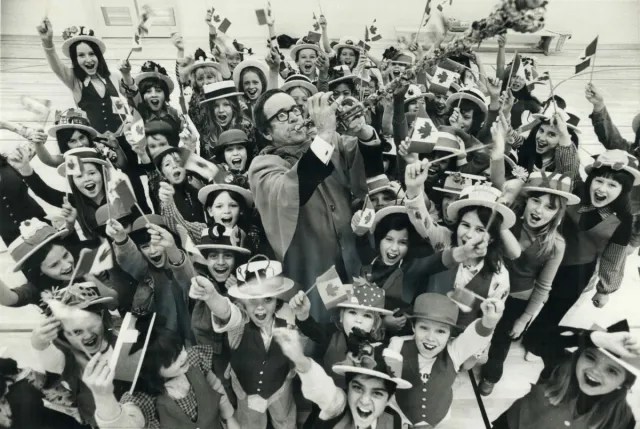
It wasn’t until 1966 that I began to learn a little about the grim-faced and bewhiskered men known as the Fathers of Confederation. They were individually profiled on the backs of Kellogg’s cereal boxes–– one of several promotions in the lead-up to Canada’s 1967 Centennial celebration.
It felt rather heady that year to be young in a blossoming nation with a promising future. The engendering of the Centennial spirit was largely due to the government’s well-funded initiatives. Although quietly caught up in l’esprit du jour, I did not join kids skipping around the school gym behind the flag, singing Bobby Gimby’s: ‘Ca-na-da’ –– we love you!’
In school years, I squirmed against any display of group identity. I wouldn’t have been caught dead wearing a high school jacket. I detested cheering crowds. Even watching a basketball game (just to see out-of-town girls), I felt claustrophobic. Luckily, Canadian school mornings did not begin with hand-over-heart pledges of allegiance. In North Korea, I wouldn’t have survived kindergarten.
Oddly contrarian tendencies continued through my early adulthood. I eschewed any garment bearing a slogan or logo. Unlike many Canucks abroad, I could never have shouldered a backpack with a flag patch or worn a flag pin on my lapel. Even sipping from a mug embossed with a college crest felt awkward. A significant fringe benefit of my drifting into teaching was never having to wear a uniform…
Along with these eccentricities are traits which do not conform with the superficial stereotypes of Canadians. I don’t end affirmative questions with ‘eh’ nor do I constantly say ‘sorry’ ––even when I ought to. I have no affection for ice hockey or maple syrup–– but especially loathe the Canadian winter…
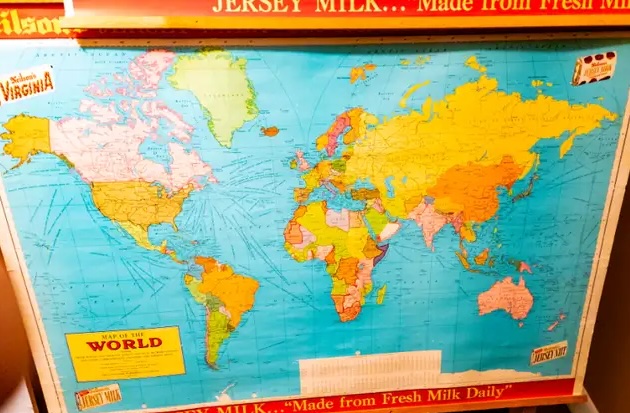
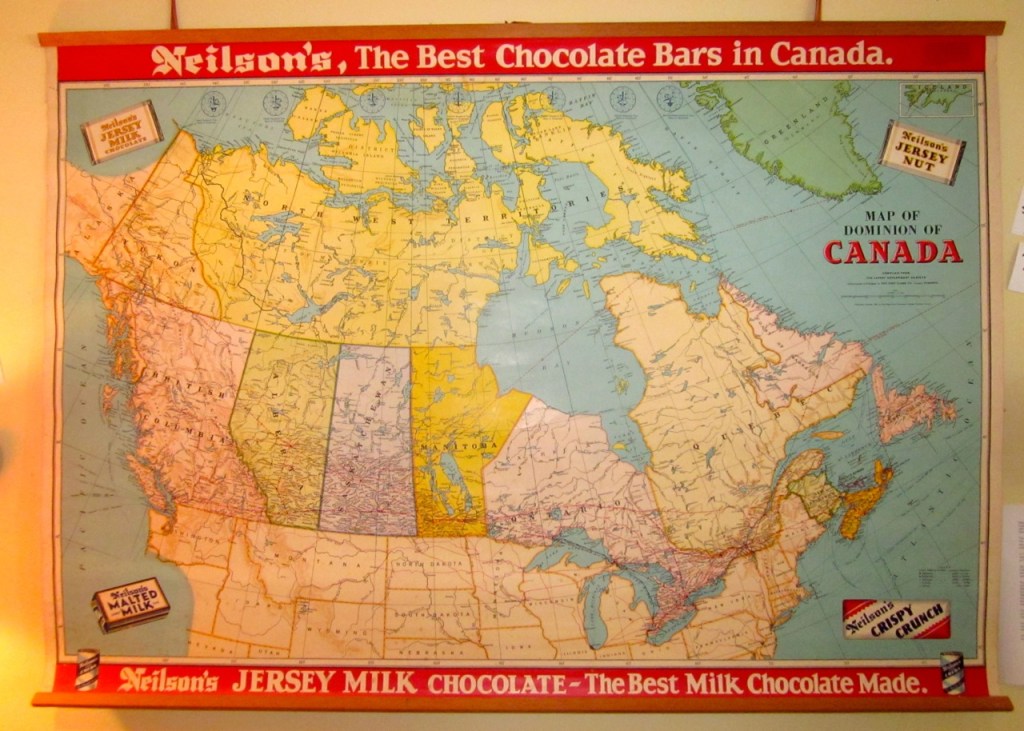
Among the few enduring memories of the lost years of grade school, was staring in a daze at the Neilson’s Chocolate Inc. world map. In it, Canada appeared in pale pink. From its wedge of the North Pole downward, our landmass looked to be largely empty. Our southern border appeared to demarcate the boundary of territory north of which the Americans thought not worth claiming. Despite its vastness from Atlantic to Pacific to the Arctic–– not even a sliver of our pink-hued dominion jutted downwards to a warmer clime. That was a bitter reminder that nowhere in Canada could one escape the winter cold…
It seemed a curse to be stuck a country where winter is, by far–– the longest season. Perhaps the ‘brutal’ winters would have been easier to bear without the tantalizing images of American TV and movies. The rustling palms of the ‘Adventures in Paradise’ TV series only sharpened the sting of driven sleet…
I never got to sail in the South Pacific. Yet in my mid-twenties, I began a long sojourn in landlocked Africa. After marrying and starting a family there––the future for my children took precedence over dread of northern dreariness. At thirty-seven, I made a bid to sink or swim back in Canada. The cold plunge was shocking. Yet within a year, I had a toehold–– teaching in a community college. After a long, rough passage, I made it to a safe harbour on what seemed the last boat departing…
Now on the precipice of decrepitude, my spouse and I have a dog to walk and grandkids to dote upon. A younger self would have derided such a ‘golden pond’ retirement. The old self, however, never ceases reminding itself of nightmarish fates, narrowly averted… I am keen not to tempt the gods’ wrath by over-indulging in old regrets. I am also superstitious about the dangers of failing to acknowledge debts. I owe a big one to Canada. After such a haphazard journey–– what other country could afford such late-life contentment?
2
Even in gratitude to my homeland, I still wonder: how might I have fared under the guiding principles of ‘life, liberty and the pursuit of happiness’?
Admittedly, I once fantasized about living in the USA. The daydreams involved marrying either of two dark-haired American girls with whom in youth, I was briefly smitten. I imagined settling down in some leafy college town, where I would teach Literature and do a little writing on the side. Unsurprisingly, such fantasies were cast in hues which sharply contrasted with Canadian greys…
Long after those imaginings evaporated, a generations-old myth still taunted. That is the belief that the best and brightest Canadians usually migrate south of the border. Only in America, so it went, can those with unique talent fulfil their potential. Somehow, this myth is just as seductive to those with little talent and absence of go-getter drive.
Even I cannot deny the appeal of the national ethos as set out by Thomas Jefferson in the Declaration of Independence. Baked-in slavery and racism aside–– every American is promised a shot at glory. With the odds of success so low, it takes guts to grab for the gold ring. But glory goes to the bold–– even in failure.
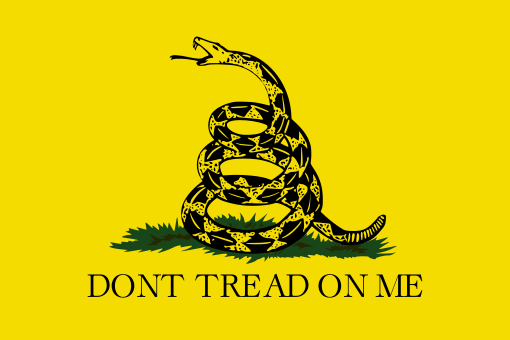
It is curious that Americans commonly believe in an afterlife–– while behaving very much in the spirit of YOLO (‘you only live once’). No other people, seemingly, are more willing to put up so many chips on such long odds. Yet they would insist that no American dream has ever been realized in humility or meekness. Core to that ethos is the ‘don’t tread on me’ individualism. In America, government and taxes are, at best–– necessary evils–– always at odds with an individual’s liberty.
Since the second coming of Trump (and the wielding of Elon Musk’s chainsaw), never has the fever-dream of drowning government in the proverbial bathtub been so close to realization. Republicans could well envision the replacement of all social spending with a national lottery. Even some of the poorest Americans might accept the trade-off of Medicaid for a monthly shot at winning a multimillion-dollar jackpot. The willingness to gamble is that deeply rooted in the American psyche…

All that serves as a reminder of just how un-American many Canadians really are. Apart from within Alberta, the entrepreneurial spirit and tolerance for risk tends to wane north of the forty-ninth parallel. Then there is the Canadian dependence on the public purse:
Canada is certainly far from a Scandinavian-style social democracy. The denizens of homeless encampments will attest to that. Still, even the bluest of American states do not underwrite health care and education to the extent guaranteed by the Canadian government.
As a former teacher, every paycheque I have drawn in Canada over nearly three and a half decades (including retirement benefits) was sourced in government coffers. That, I appreciate. Still, even hearts on the left cannot entirely ignore the question often posed by fiscal conservatives: how much does a nanny state–– even one with only a part-time nanny––stifle initiative?
In that regard, I sometimes recall my first days of arriving on the west coast in July 1974. Alone with just a few dollars and zero connections, my circumstances brought to mind a quote ascribed to Samuel Johnson: ‘…when a man knows he is to be hanged in a fortnight, it concentrates his mind wonderfully.’ With nothing to fall back on––I had to find work immediately–– however menial. Once I had a roof over my head, I figured I would pursue more fulfilling job options.
Within four days, I was shelving books at the city library. It barely paid enough to rent a single room. Still, as an official city worker, I had some security and a few benefits. The sharpness of desperation was blunted. Instead of following the original plan to pursue writing for an ‘underground’ newspaper––I was calculating the number of weeks needed to qualify for Unemployment Insurance. The next year I collected ‘pogey’ for several months. Like so many of my ilk of that era, I abused those benefits. At least I was never a member of the notorious ‘1975 UI ski team’…
So, the question never ceases to dog: might I have been bolder in those early years without the social safety net? In America, might I have dared to try a high-wire act? To be realistic, I can imagine very few of my alternative American lives in the multiverse playing out in fortune or fame… Rather more plausible scenarios involve degrees of squalor.

“…Somebody drew that line many years ago with, like, a ruler — just a straight line right across the top of the country…”
That comment was memorably made by King Donald, during the recent visit to his gilded office by new Canadian Prime Minister, Mark Carney. In first seeing the video clip, it occurred that I had often stared at that Canada-US boundary on maps as a child, and thought the same thing as did Trump…
It’s not for sale,” Carney replied: “Won’t be for sale, ever.”
I didn’t vote for him–– but loved that rejoinder.
Still, that meeting did nothing to relieve the anxiety felt since the Trump re-election. Canada is so vulnerable to the squeeze of the American Kraken! We can be trapped not only in the grasp of its talons–– but by their sudden release…
Yet somehow, for the last hundred and fifty-eight years, Canada has resisted American republicanism. The guiding principles of ‘peace, order and good government’ set out in the BNA Act of 1867, has arguably led a more just society than would have been in a northland ravaged by the hell-bent pursuit of liberty.
Undeniably, just as America–– Canada has shameful history with which it has yet to come fully to terms. That is especially in regard to the treatment of Aboriginal people and minorities. While elements of Maple MAGA have called for copying big-brother in purging “woke history” and sanitizing school curricula––fortunately, those voices are still on the fringe. Unlike too many Americans, most Canadians are not that uncomfortable with ambiguity.
In any case, along with fellow Canadians, I have been feeling unusually patriotic of late. That will not be manifested in my wearing of red and white face paint on the upcoming Canada Day. Our pooch, Pancho, however, may well be sporting a maple leaf bandana…
2025, May
*****************************************************************
 Coprolites in Amber (etc.)
Leave a comment