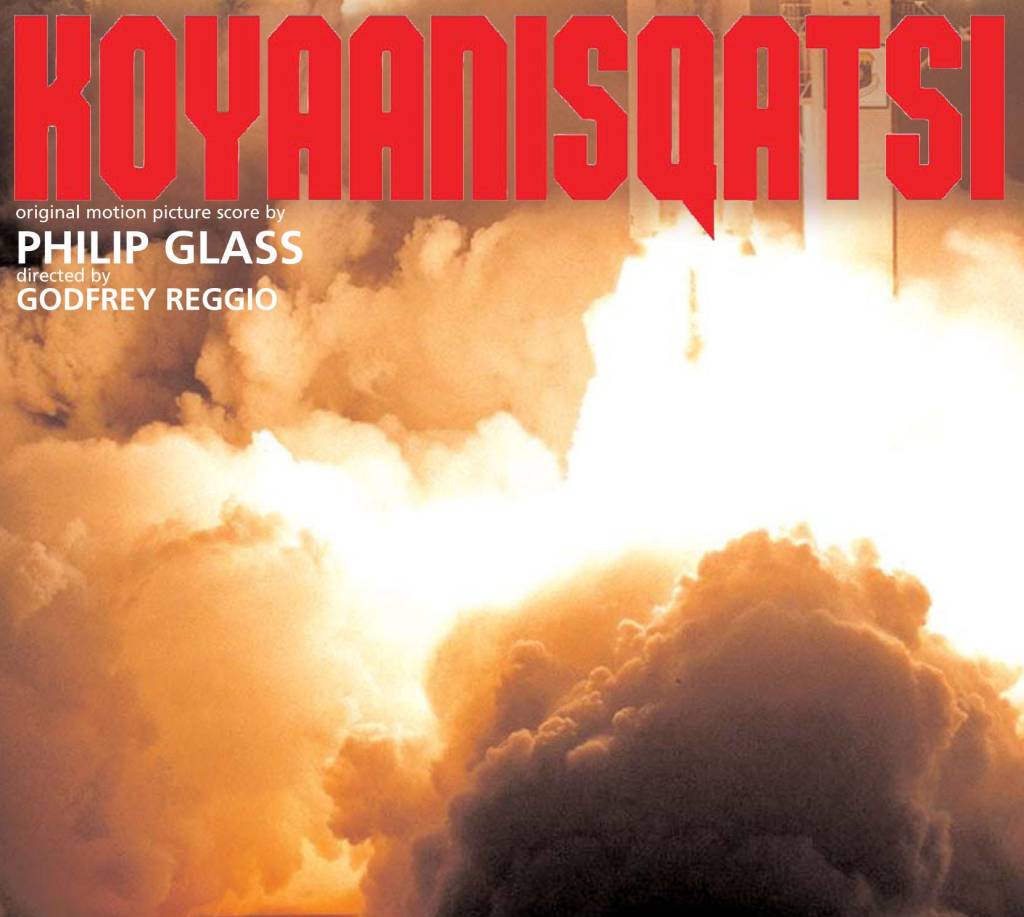
In the visually stunning non-narrative documentary, ‘Koyaanisqatsi’ (1982), a Saturn 5 rocket is shown blasting off in slow motion. Against doom-like organ chords of the Philip Glass score, white flakes of insulation are shown drifting down through swirling fire. The title of the film translates as ‘world out of balance’ from the language of the Hopi Indians–– whose New Mexico lands were appropriated for secret U.S. military testing…
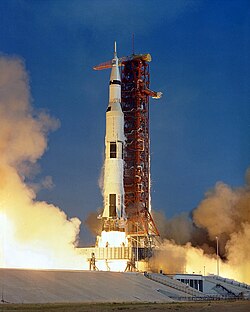
It was a Saturn 5 rocket that launched Apollo 11 from Cape Canaveral on July 16th, 1969. Myriads watched the lift off of the first manned moon landing mission within bowel-shuddering distance. In seeing footage of that blast off, one may be reminded of the scientists and soldiers who watched the first atomic test blast in the New Mexico desert twenty-four years earlier.
In witnessing that first live test of his secret Manhattan Project in 1945, Robert Oppenheimer was profoundly unsettled by the unnatural forces his project had unleashed. He famously thought of a quote from the Upanishads, ascribed to the cobra-coiled god, Vishnu: “Now I am become Death, the destroyer of worlds...’
Among the nearly one million who gathered for the Apollo 11 launch–– it was unlikely that any thought of Vishnu or a world out of balance crossed a single mind. Filmed sequences of the (virtually all white) crowds show exuberant anticipation. Shut out for that moment were such unpleasantries as a war in Vietnam, campus protests, and simmering racial tension. In one film clip of the reviewing stand, Vice President Spiro Agnew, self-proclaimed bete noir of hippies, is shown in sunglasses smiling with thumbs up…
‘For all Mankind’ (1989), recently shown on the TCM channel, is one of many films honouring the first human landing on the moon. Using archival footage from July 1969, the documentary chronicles the Apollo 11 mission from pre-launch to splashdown. For the attention of younger viewers, a documentary film cannot compete with video game versions or virtual reality simulations of the moon landing. Yet even the upgrade to high definition of images first seen in grainy black and white are impressive for those old enough to remember watching the event on live TV.
Notably, this film makes no reference to the broader social context of the era. For many oldsters, divorcing the moon landing from its late 1960s background is missing the real story…
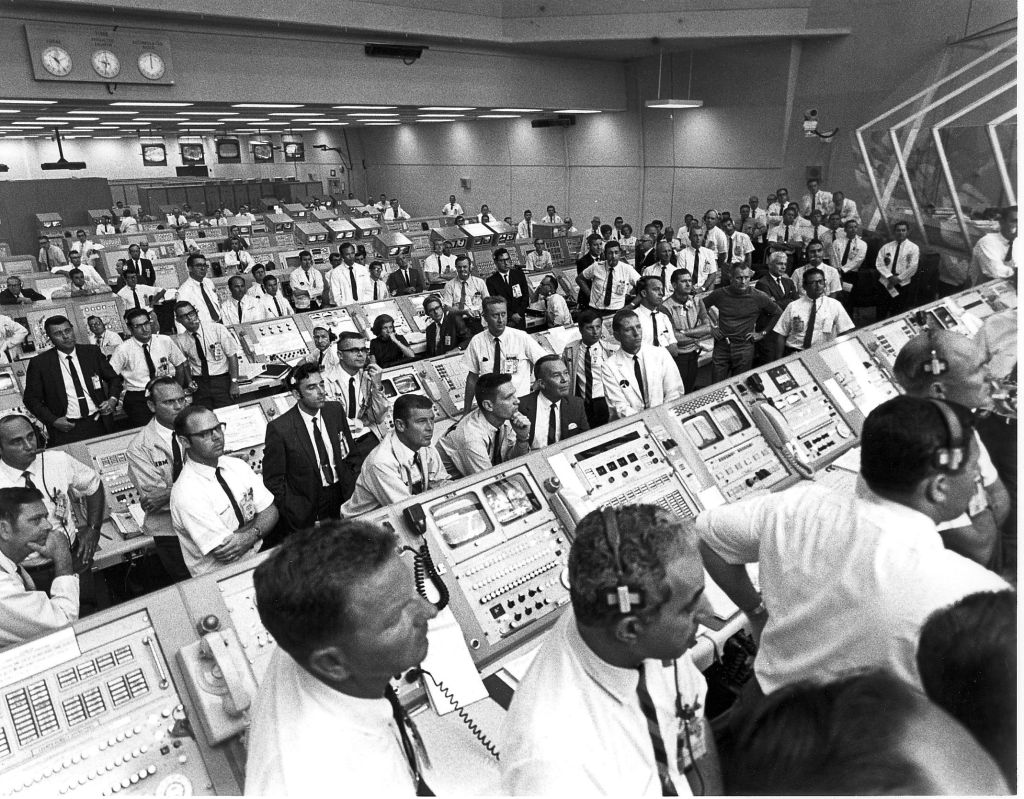
Just as in the original TV broadcasts, much of ‘For all Mankind’ is comprised of alternating sequences between Mission Control and the Columbia command module. Monitoring the flight in rows of boxy consoles, scores of NASA technicians by turns, hunch forward in anxiety or lean back in relief. In live broadcasts from the capsule bound for lunar orbit, the astronauts are shown toggling switches or summersaulting in weightlessness. They sometimes turn their hand-held Hasselblad camera to the porthole–– revealing the receding earth: a cloud-swirled “blue marble” shimmering against the blackness of empty space.
The film climaxes with the harrowing descent of the lunar module and the fuzzy video of the first earthling setting foot on the moon. The fuzzy images of Neil Armstrong’s first steps onto the grey lunar surface are as ghost-like as remembered from live-TV. It is no surprise that conspiracy buffs continue to claim that the event was staged…
On the Sunday afternoon of July 20th, 1969, I was among the estimated 20% of the earth’s population in the TV audience. Even scornful teens fathomed that the event was an historical moment not to be missed.
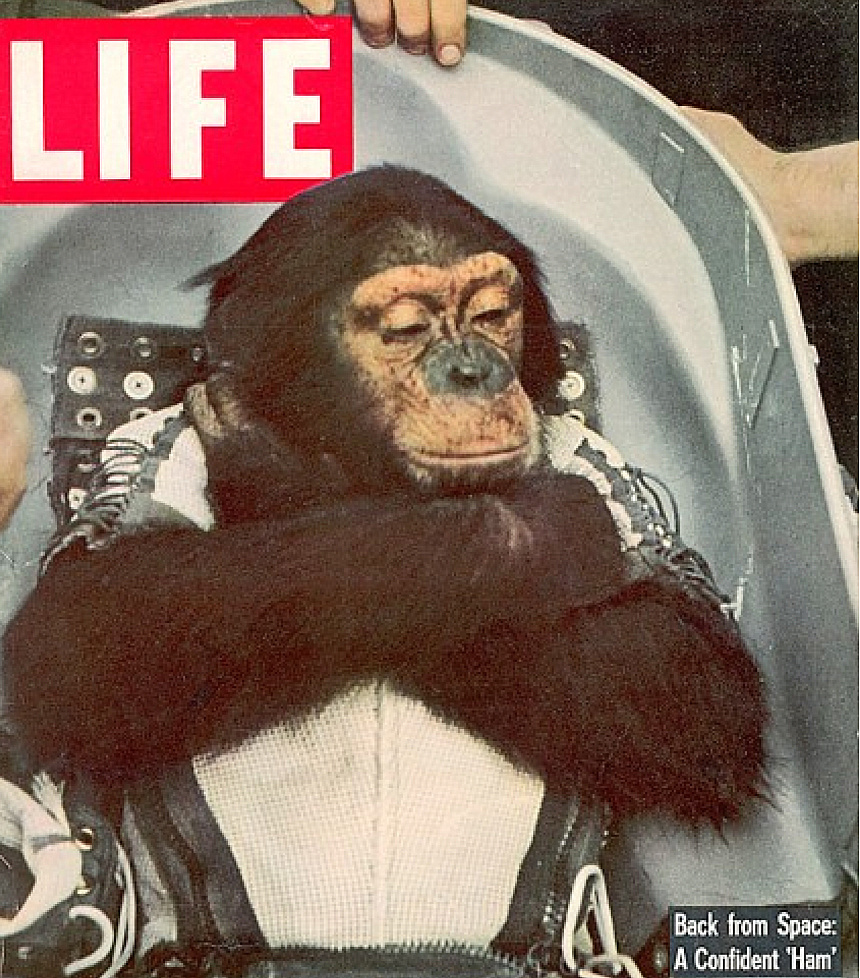
Almost from its inception, I’d followed the space race–– although not as avidly as some boys. I was far more inclined to pin up pictures of monsters than of rockets. In 1961 at the age of nine, I was disappointed in hearing about the suborbital flight of Ham, the astro-chimp, followed by the first orbital flight by cosmonaut, Yuri Gagarin. The excitement in those achievements seemed overblown. Sci-Fi comics such as ‘Mystery in Space’ had given me the impression that interplanetary travel was already common.
Through my pre-teen years, live coverage of the Mercury and Gemini launches sometimes interrupted regular TV broadcasting. Most of the coverage offered only a stationary shot of the launchpad with a commentator’s low-voice narration. Having no other option than the single TV channel accessible in my village, I watched those boring attempted launches. Many ended in the freeze of the countdown clock and a “scrubbed” mission.
With adolescence, TV was no longer my primary source of entertainment–– so I missed much of the coverage of the earlier Apollo flights. But then came the December 1968 moon flyby of Apollo 8. The first photos of the home planet from a distance were stunning. I had no doubt that posters of earth rising over the edge of the moon were cool enough to display right alongside the psychedelic art of Stanley Mouse… Still, by the fall of 1969, another poster appeared on some of the same bedroom walls displaying ‘Earth Rising.’ It showed an astronaut’s foot about to step into moon dust––directly onto a turd…
From my teen perspective, the first moon landing occurred in the raging midst of a ‘culture war’ long before that expression was coined. Along with cohorts in the supposed counterculture, I viewed the theatrics of NASA with measures of bemusement and disdain.
The nerdy white men in white shirts at Mission Control were certainly not fellow travellers with my ilk. Crew cuts seemed to be their hair style of choice with only a few of the comb-able heads sporting slightly longer sideburns. Many of those middle-aged NASA techies looked like the fathers who tore down blacklight posters and rifled through their teenagers’ drawers for dope.
As for the Apollo astronauts–– they no doubt possessed exceptional skill and courage. Yet to many non-Americans–– and certainly to Americans of colour–– it was telling that individuals selected for first moon landing were not only all white–– but all of America’s founding Anglo Saxon tribe…
From the NASA perspective, Neil Armstrong was probably the perfect choice to be the first American to set foot on the moon. It was perhaps no coincidence that he was a Presbyterian. He was thereby steeped in the virtues which gave rise to American greatness–– according to the mainstream mythos. As an Eagle Scout in boyhood, he had demonstrated striving and perseverance. Yet he could also be convincingly presented as an unassuming “aw, shucks” mid-western fellow.
His first words uttered on the moon (“…that’s a giant leap for mankind.”) seemed a stilted attempt to broaden his achievement to encompass all of humanity. However, there was no ambiguity about the nation that first step was meant to glorify. Posed in his bulky space suit before the propped-up Stars and Stripes, Armstrong looked rather more like a Michelin Man than a conquering American hero.
Fifty-six years after his historic achievement, Neil Armstrong is surely a leading candidate for Trump’s soon-to-be Garden of American Heroes. It would not be surprising if his statue is erected beside that of a fellow American trailblazer like Daniel Boone…
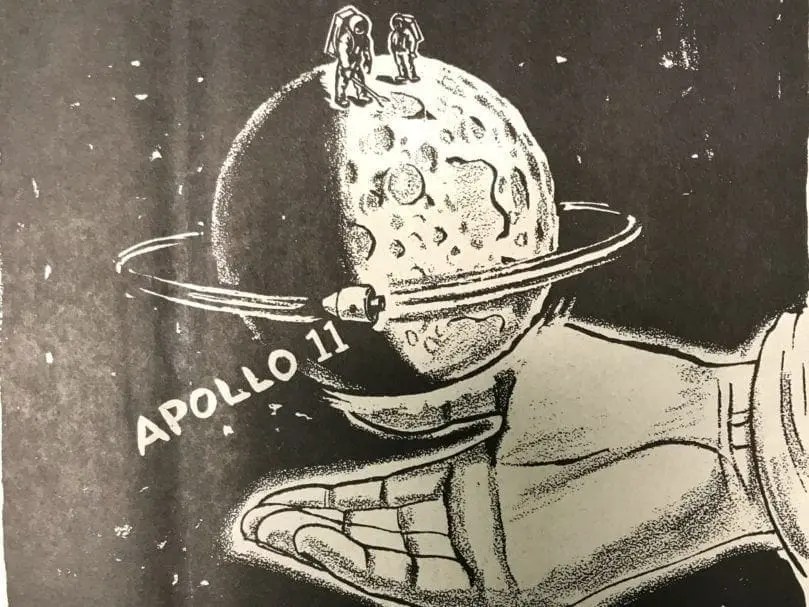
In showcasing Armstrong and his fellow astronauts throughout the Apollo 11 mission, NASA took pains to demonstrate their supposed ordinariness. In the live-broadcasts from the command module they were shown engaging in down-time activities. They clowned around– playing slow motion catch with weightless objects. They shaved on camera and asked Mission Control to relay football scores. In some minds, those performances did nothing to diminish the impression of robotic humanoids…
In a not-so-subtle messaging of political sympathies, the Apollo 11 astronauts were shown in the command module playing their favourite music. Their playlist featured easy listening (Frank Sinatra) and Country Western (Buck Owens). The music of the Grateful Dead or Jimi Hendrix–– popular with GI grunts in Vietnam and the protestors of that war––was certainly not on their playlist. NASA would probably have insisted that was just a matter of personal taste.
It neither seemed without significance that the moon mission was imbued with American religiosity. Armstrong’s fellow Presbyterian, ‘Buzz’ Aldrin, apparently took ‘holy communion’ in the hours before stepping down the lunar module ladder. Michael Collins, then orbiting alone in the command module, reportedly prayed for his comrades down below. Interestingly enough, that sole Catholic on the mission did not get to walk on the moon.
On a live-televised phone call to the moon, Richard Nixon claimed that “all mankind” (in 1969 ‘humankind’ had yet to exist) was praying for the Apollo crew’s safe return. Of course, for most Americans only one deity qualified to receive those votives. That obviously wasn’t Allah, Buddha or Krishna… Meanwhile, many young spiritual seekers of the era were appalled by the sanctioning of the gods of mammon and high technology by the Judeo-Christian deity in chief…
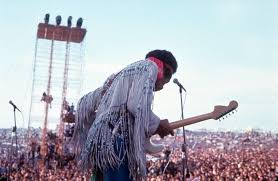
On August 15th 1969, a few weeks after the Apollo 11 splashdown, American media latched upon its second most newsworthy story of 1969: the Woodstock music festival. 400,000 sweaty bodies squatting for three days in muddy pastures without adequate food or water would seem by any measure, a disaster. Indeed, the festival was a financial disaster for its organizers–– until the documentary movie was released. Yet long before that, the Woodstock Aquarian Exposition had been mythologized as an epic gathering of counterculture youth–– blissed out in peace, love, and the vibes of their tribal music…
For its antagonists, thousands of hippies zonked out for three days by dope and mind-numbing rock was nothing to acclaim. In that telling, the supposed tranquility of the mass gathering was only due to a mass chemical and sonic lobotomy.
Both negative and positive spin aside, the juxta-positioning of the Woodstock story with the first moon landing offered a rather fitting end to the 1960s in America. Even at the time, a common journalistic trope was that the two events represented contending ‘visions’ for America’s future…
Joni Mitchell was a Woodstock no-show. Yet a few months after the event, her eponymously titled composition was a hit for Crosby, Stills and Nash–– who had appeared at the festival. Joni’s own rendition of her song has a poignancy which the cover versions lacked. In a slow tempo, she strikes heavy piano chords in accompaniment to her phrasing. Her refrain, ‘We’ve got to get ourselves back to the garden,‘ is plaintively haunting. Whether intentional or not–– her tribute to Woodstock sounds like a dirge…
As for opposing ‘visions,’ it is hardly surprising that Donald Trump was not an attendee at Woodstock. In the summer of 1969, the draft-evader was busy wheeling and dealing in his father’s real estate company in Queens, NY. Potential free love with hippie chicks would certainly have appealed to the 23-year-old playboy. The festival wasn’t far away–– just a couple of hours north of his father’s office. Still, wild horses couldn’t have dragged the go-getter into a mass gathering of unwashed freaks and losers…
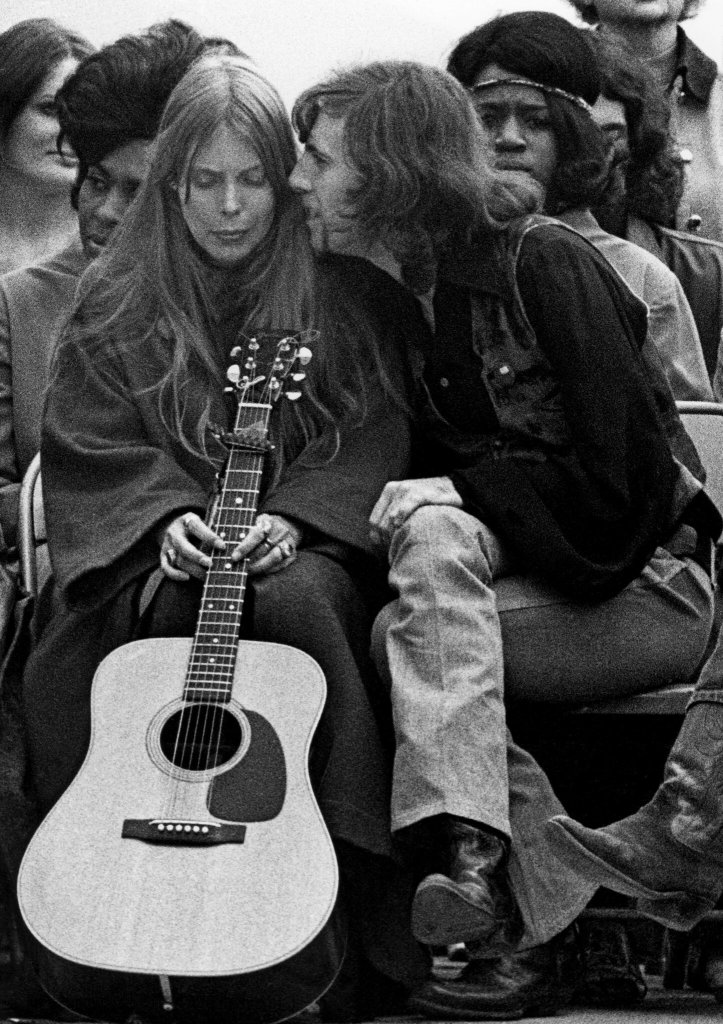
A few weeks ago, the legacy of the 1960s came up in a chat at Starbucks with an old friend. He had contended that an unbridgeable gulf in communicating with younger people (including our own children) was due to their never having experienced coming of age––as had we–– amidst “a social revolution.”
A social revolution?
Even as a long-haired teen who identified with the supposed counterculture, I sensed that the amorphous movement was largely based in styles and appearances. Within months of the 1967 ‘summer of love,’ sleazy characters were slipping in and out of a hippie/freak identity by mere changes of hair style and dress. Long before 1969, it seemed that the fragile Arcadian fantasy was smothered by commoditization and accompanied merchandising. A new class of entrepreneurs was trafficking to youthful tastes in fashion as much as in music and dope. Heroes of the youth ‘revolution’–– particularly the rock stars–– had become a decadent nouveau aristocracy.
Meanwhile, the handful of “real hippies” had retreated to communes or taken journeys to the East (A few to reemerge post enlightenment–– as stock traders). Some spiritual seekers became proselytizing Children of God or shaven-headed Hari Krishnas. The few politically inclined were in jail or in hiding… In retrospect, it is challenging to see ‘Woodstock Nation,’ as much more than hype for journalistic copy and record sales…
So, across the table at Starbucks, I wondered––did all that hypocrisy and disillusionment in the 1960s constitute a ‘social revolution’? Not up to challenging an old friend in what seemed a cherished belief––I bit my lip…
All that skepticism is not to deny the poignancy of a 25-year-old Joni Mitchell’s dream of ‘…bombers riding shotgun in the sky/turning into butterflies above our nation…‘ Perhaps there really was something of an Age of Aquarius outside the Broadway musical–– if only in a few brave minds for a few brave moments…

It is certainly significant that in the summer of 1969, a few characters a little too young to attend Woodstock were already programming computers. By the mid-1970s, Bill Gates (still in late teens) and his partner, Paul Allen, had already established Microsoft. By the end of the 1970s, the trend was clear. The engineers and computer geeks would be the inheritors of the future…
A half century later, Gates is a retired philanthropist. In that status, he is a somewhat benign outlier among the tech industry superstars who have so staggeringly prospered from harnessing something of the digital Promethean fire…
It is also notable that more than a half-century after the last Apollo mission, an ailing government-funded NASA has largely been supplanted by private space agencies owned by the very wealthiest hi-tech zillionaires. Prominent among them is SpaceX–– best known as the plaything of the richest of all earthlings.
Elon Musk is seemingly obsessed with establishing a self-sustaining city on Mars. He is apparently in a race to escape earth before the collapse of our life-sustaining environment. His longer-term vision involves dispersal of evolved homo sapiens throughout the galaxy. The seed will presumably originate from his own DNA… At this moment, he and his rival, Donald Trump, are arguably the most dangerous political figures on the home planet…
Less dangerous than Musk–– only in proportion to his mere $20,000,000,000 compared with Musk’s estimated $414,000,000,000–– is Musk’s former partner, Peter Thiel. After selling PayPal which he co-founded with Musk the late 1990s, Thiel multiplied his raked-in chips by investing in Silicon Valley startup companies. He also became the mentor of weaselly Vice President JD Vance…
His most successful company, Palantir, is creepily named after the all-seeing globe in ‘Lord of the Rings.’ It supplies AI surveillance and military drones which the IDF are now effectively ‘beta-testing’ on a helpless population in Gaza…
In a recent podcast interview with conservative journalist, Ross Douthat, Thiel obliquely spoke of his hopes and fears. While it is difficult to categorise his mishmash political ‘philosophy,’ he is blatantly anti-democratic. He seems committed to avoiding taxes, regulation–– and possibly even death–– through high-tech medical intervention. His techno-fascist vision is shared by several Silicon Valley tech-bro billionaires, who also rallied to Trump in the 2024 election…
At one revealing point in the podcast interview, Thiel was asked about what he feared most from ‘the left.’ He spoke of the threat of a “Greta Thunberg-like” figure emerging as leader of a one-world government which dictated rules for supposed environmental protection. As a Christian, he opined such a dictator could be “like an anti-Christ.” Following that comment, both he and Douthat had a little snigger about Thunberg’s naiveté in being on a ship which attempted to break though the Israeli blockade and deliver food to starving Palestinians.
At fifty-seven, Thiel is among the oldest of the right-wing Silicon Valley tech-bros. Yet along with the others, he is young enough to have been parented by a mother or father who perhaps once shared something of the vision of ‘the Woodstock Nation.’ Be that so–– those parents certainly did not “teach their children well” as enjoined by Crosby, Stills and Nash… As for Greta Thunberg–– I would like to think she is a granddaughter of old hippies who did teach their children well…
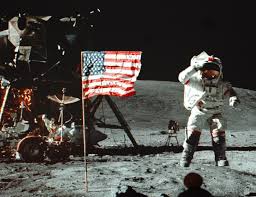
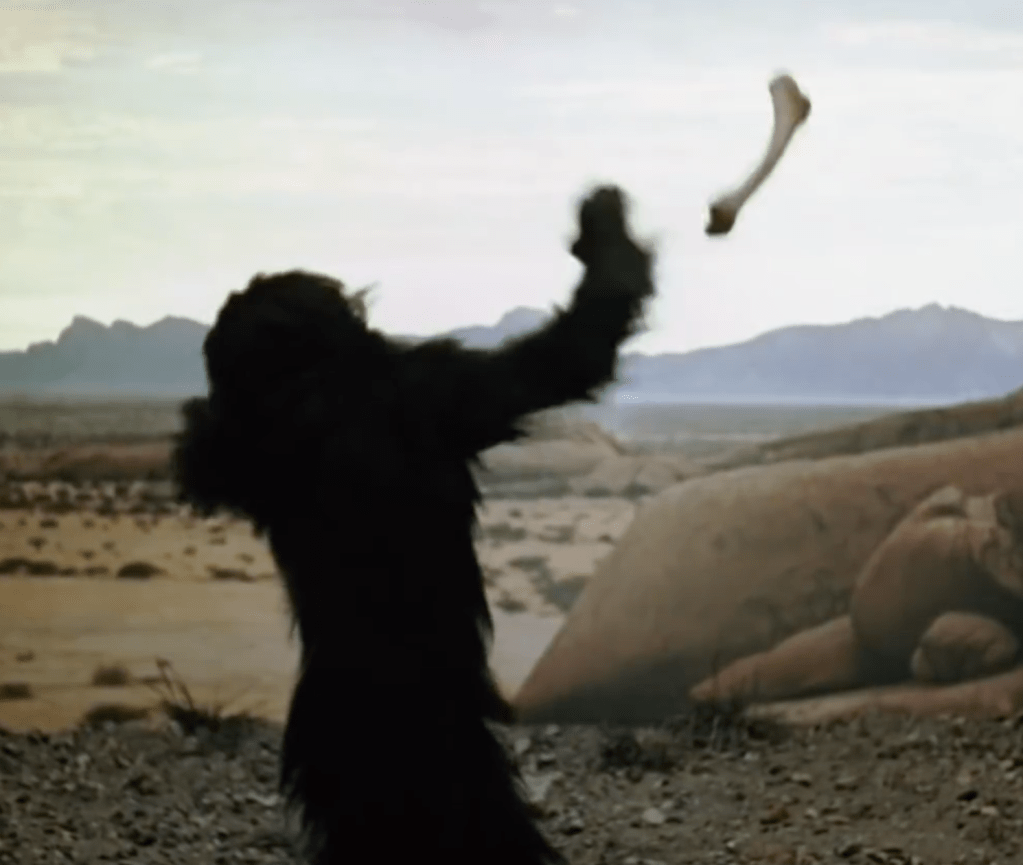
One of the final sequences of ‘For all Mankind’ shows Armstrong and Aldrin bunny-hopping in slow-motion in the slight moon gravity. Set against a soundtrack of Brian Eno’s minimalistic ‘An Ending,’ the effect is eerie and evocative. To my mind, the sequence evoked the slow motion shot of the bone triumphally tossed skyward from a pre-human hand in ‘2001: A Space Odyssey.’ That iconic shot cuts forward three million years with the falling bone incarnated as a revolving space station…
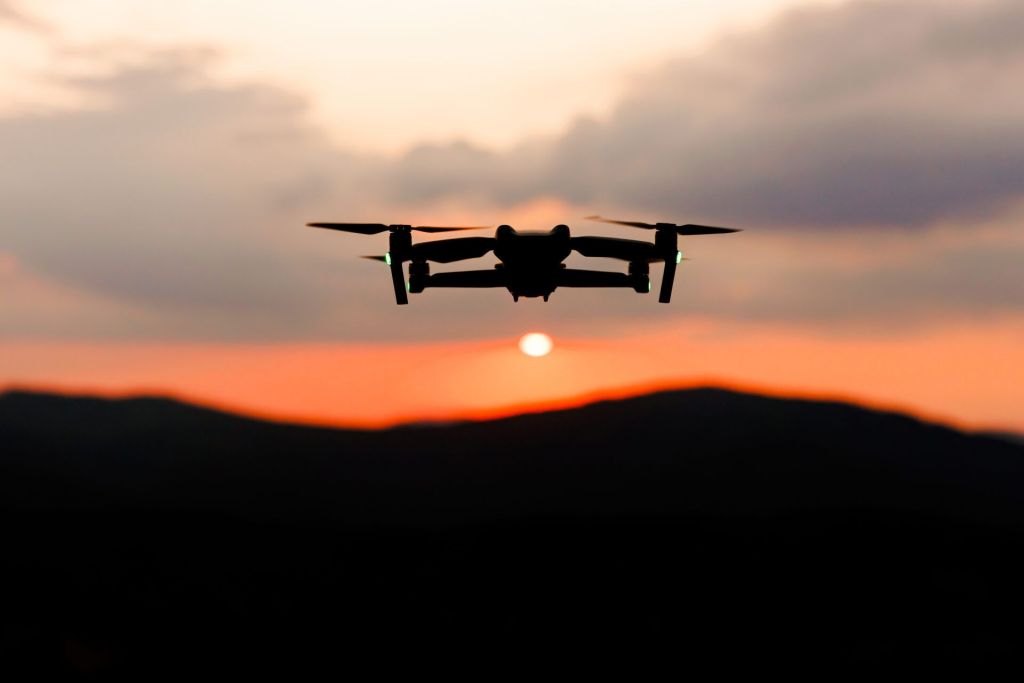
The cheapest laptop of today would run circles around the master computer that guided the Apollo 11 mission. The software ‘tools’ operated by the army of technicians needed for the 1969 moon mission are bone weapons compared with the leading AI technologies of 2025… Still, one may imagine a cinematic jump-cut from an image of Armstrong and Aldrin hopping on the moon to another of hovering killer drones…
-2025 July
 Coprolites in Amber (etc.)
Leave a comment