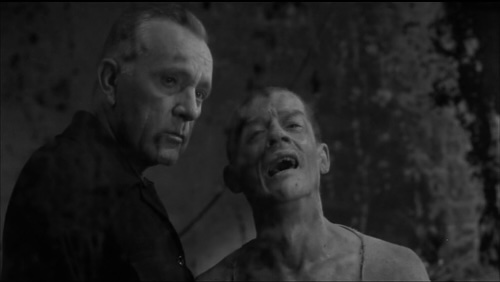
In a recent rereading of Orwell’s ‘1984’, I found the most chilling passage to be the same one that had left me shivering at the age of sixteen. That is the description of Winston Smith’s first look at himself after prolonged torture. O’Brien, his confessor/torturer, orders him to remove his filthy clothes and step forward into a winged mirror:
He approached it then stopped short. An involuntary cry had broken out from him…
“Go on,” said O’Brien…
A bowed, grey-coloured skeleton-like thing was coming towards him. Its actual appearance was frightening and not merely the fact that he knew it to be himself…’
Winston then moves in closer to see his reflection: ‘The creature’s face seemed to be protruded because of its bent carriage. A forlorn jailbird’s face with a nobby forehead running back to a bald scalp and crooked nose and battered looking cheekbones…’
In the novel, the ruination of Winston’s body and mind epitomizes the dark triumph of an all-powerful state over a last vestige of resistance. Yet even divorced from a dystopian political theme–– the imagining of one’s own face suddenly and hideously transformed, is no less nightmarish.
In some manner, almost everyone who grows old faces such a transformation––however gradually. I suspect that many fellow septuagenarians, upon glancing in the mirror sometimes similarly shudder: ‘Can that wizened creature actually be me?’
Apparently, one of the final observations in Orwell’s notebook before his death at only forty-six was: “At fifty, everyone has the face he deserves”. He never got to see his face at fifty–– let alone at seventy-five. Perhaps missing those faces would have seemed a small consolation for dying far too soon…
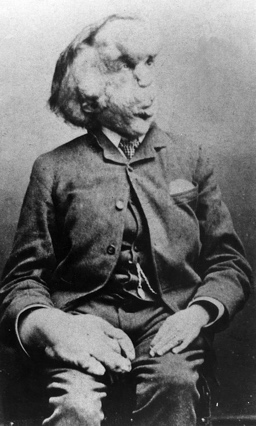
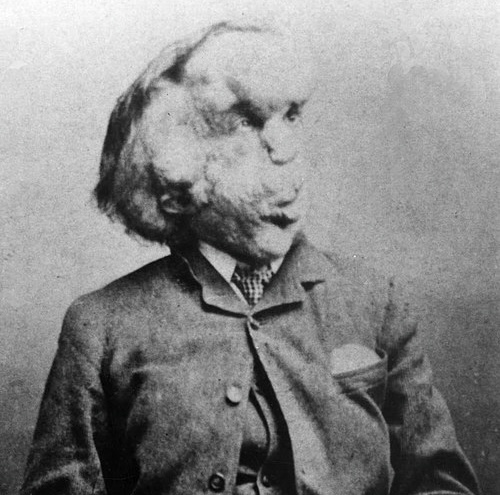
When I cringe over any aspect of self in the mirror, I also sometimes think of Joseph Merrick. His facial malformation was such that in the mid-Victorian era he was exhibited in freak shows. In more recent times, Merrick was the subject of David Lynch’s biographical drama ‘The Elephant Man’ (1980). In one scene of that film, his crude head-covering is torn off in a crowded London street. “I am not an animal,” he screams to the startled gawkers, “I am human!” In another, Merrick’s sadistic exhibitor terrifies him by holding a mirror to his face.
Perhaps the humiliations suffered by the historical Merrick were even greater than those depicted in the film…
Morbid curiosity triggered by that thought recently landed me on a website called ‘Changing Faces.’ It is a British-based organization offering support and promoting respect for “everyone with a visible difference…”
While ‘visible differences’ of the face are highlighted, the site covers a broad range of physical conditions which can draw unwelcome attention. Hardly any category of bodily abnormalities resulting from accident, disease or congenital anomaly is missed.
The sub-sections offer information and coping strategies for each category of ‘visible difference.’ Advice is offered not only to those affected but to their social circles––as well as to a general public. Appropriate to the fall season (when I browsed), the site remarked on the celebration of Halloween: ‘Consider your costume. You might be able to remove your prosthetic scars at the end of the night–– but many people can’t.’ There was no mention of the potential insensitivity of pirate eye-patches or hooks.
Among the few ads on the site is one featuring skin camouflage products. The advertiser carefully notes that such products are only an option for those: ‘not yet ready to celebrate their visible difference…’
One section is devoted to positive thinking. A list of ‘mottoes’ is provided for supporting self-esteem (e.g.: ‘I am proud of myself and who I am’). It is recommended that a personal motto be repeated to oneself at stressful moments––such as when facing public stares. Without any intent to be facetious, I would add to the list of mottoes: ‘Stare all you want, asshole–– I don’t give a fuck!’
Admittedly, I found the care taken to avoid offence on the site sometimes veered from carefully respectful to patronizing (e.g. ‘differently abled’ for ‘disabled’). Still, I fully acknowledged that the information was aimed at those possibly desperate for support. A person coping with third degree burns who stumbled upon this site would certainly not quibble about its language or tone…
In scrolling through the ‘Changing Faces’ site, it also occurred that even if such support had been available to Joseph Merrick–– he wouldn’t have needed it. After his rescue by humanitarian Dr. Frederick Treves, he was sheltered at a London hospital–– where he became something of a celebrity. He built models of London cathedrals and engaged visitors in literary conversation. His guests (including royalty) found him sensitive and refined. He also wrote verse. The following is probably not his best–– but it is revealing:
‘Tis true, my form is something odd
but blaming me, is blaming God,
Could I create myself anew
I would not fail in pleasing you.‘
Perhaps that was a gentlemanly Victorian’s way of saying: ‘Any horror you feel in seeing me is your problem, mate!’ In any case, that little verse suggests that bearing a severely malformed face did not make Merrick ashamed of himself.
At a personal level, Merrick’s presumed self-acceptance connects with a memory of a student I once taught in a boarding school in Zimbabwe in the early 1980s:
Tatenda was one of the “crippled” kids who attended the school under the sponsorship of a Catholic charity. He had a congenital spinal deformity which left his body severely atrophied below the waist. He was adept at walking on his hands–– scampering along faster that he could move in a wheelchair. His teachers generally thought Tatenda hopeless but a bevy of female students helped him as needed. He had a charming smile. When he got a ‘D’ in my English class, he didn’t seem to mind. He once wrote in a composition: ‘I am a crippled fellow yes I know–– but the girls say that Tatenda he sure has got a handsome face!’
I was a little jarred by that comment. It struck me an expression of the coping mechanism common across the broad spectrum of people with congenially afflicted handicaps. That is the tendency to latch upon some supposed compensation for the disability. That may be through assuring themselves of superior intelligence, a special talent or even some athletic ability. For Merrick, it was a cultivated mind; for Tatenda–– a handsome face.
I don’t know what became of Tatenda. Perhaps the world into which he was thrown after failing secondary school was even harsher than the village he came from. Yet in our brief acquaintance, I felt that rather like Merrick––Tatenda possessed something rare for a severely disabled person of his place and time. He did not seem to be uncomfortable in his own skin…
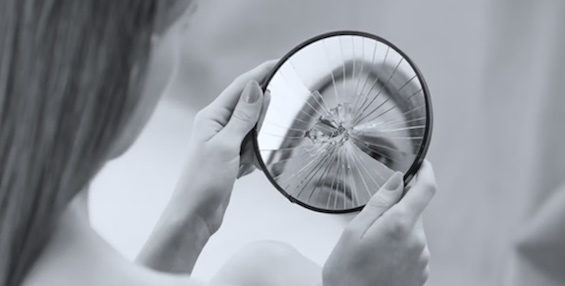
Today there are impressive numbers of those who in earlier times would have been labelled ‘disabled’ or ‘disfigured’ who appear to be totally at ease in their skins. In many countries, highly successful people in all the categories listed on ‘Changing Faces’ are highly visible. Some are influencers and performers. There are comedians who even work their shtick around their ‘visual differences.’ Whether their jokes land or not–– any awkwardness in their initial appearance usually disappears by the end of their shows…
However, to borrow the overly polite phrase of ‘Changing Faces’––there are still too many people “who are not yet ready to celebrate their visible differences.” Some are so ashamed of their abnormal bodies or faces they dare not show up in a mall let alone appear on a stage…
Many of them may have incurred ‘visible differences’ though injury or disease. Plainly, it is harder to look in the mirror at traumatic disfigurement than at deformity borne from birth…
Meanwhile, there are those who are far more self-conscious about their bodies than others with more noticeable ‘visible differences’… That observation led me to find out more about ‘body dysmorphia.’
The Google genie informed that the International Classification of Diseases has recognized obsessive bodily shame as a psychological disorder since 1990. I then asked whether the shame sometimes felt by those with severe visible differences was a form of ‘body dysmorphia.’ To paraphrase the AI generated response: The distress felt by a person whose abnormalities really do attract furtive stares is not necessarily symptomatic of BDD. A positive diagnosis requires that the distress be overwhelming and “disproportionate to the cause…”
It was not surprising to also be informed that the supposed bodily flaws of many affected by BDD are exaggerated–– or even imagined. Anxiety over the shape of one’s nose, for example, can magnify to a morbid self-disgust. Such cases are usually recommended for counselling. Some affected individuals seek cosmetic surgery–– which is unlikely to ease the underlying obsession…
Of course, suffering based on delusion is suffering, nonetheless. Yet it is difficult to resist comparing anxiety over a face supposed imperfect, with that over one melted by electrocution or chewed up by a mad dog. It is hard not be more sympathetic with cases which no amount of counselling or cosmetic surgery can ‘cure.’
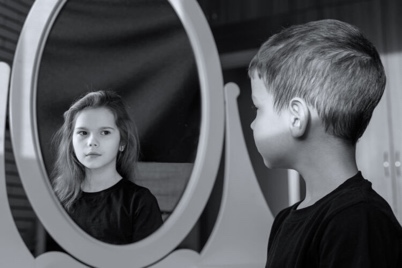
A little research on body dysmorphia led to curiosity about another form of discomfort in one’s skin:‘gender dysphoria.’ The onset of a perceived mismatch between one’s gender identity and biological sex is claimed to begin in many cases, well before puberty.
I discovered that in 2019, gender dysphoria was officially moved out of the mental disorders category of the International Classification of Diseases (ICD 11) and assigned to “conditions related to sexual health.” Still, I wondered: is ‘gender dysphoria’ after puberty not a form of body dysmorphia? Google AI informed that some individuals with the condition may have overlapping symptoms with body dysmorphia.
A person with gender dysphoria might feel disgust with certain features of their own bodies (e.g. their breasts or sex organs). Yet according to the ICD designation, distress of gender dysphoria is not based on distorted ideation. Once the individual is availed of gender-affirming treatment, the core anxiety over bodily appearance can presumably be relieved.
In checking the Canada.ca website page for ‘gender-affirming care’ (GAC), I learned that across the dominion–– Medicare covers the basics. That includes counselling, hormone therapy and surgical options. The latter provides sexual realignment surgeries, as approved by medical team assessment. The site differentiates between the publicly funded procedures and those which are in a grey zone. For example, vaginoplasty (creating a vagina in a transition to female) is covered in all provinces while facial feminization is not. Breast augmentations might be covered in Quebec but not in Alberta…
The sanitized government site notably avoids usage of the term ‘cosmetic’. For good reason, cosmetic enhancements have always been regarded as elective treatments–– paid out of pocket, just as for liposuction or a nose-job. Obviously, an overburdened public health system can no more afford to provide cosmetic treatments than veterinary care for our furry companions.
Still, one might consider a case of someone deeply depressed over a pointy nose he feels hideous. Perhaps that person is a suicide risk. Could a successful appeal be made for public funding of plastic surgery which could relieve that person’s existential distress? Probably not.
I do not question that help for chronic emotional distress is a critical component of public health care. Yet it appears that many who seek medical gender alignment often desire more than just to look like an ordinary person of the gender with which they identify. In many cases, the desire appears to be transformation into manly men or beautiful women… At which point does GAC treatment shade into cosmetic enhancement?
As a category for contrast–– plastic surgeries for ameliorating certain ‘visible differences’ are routine. There is no issue with the public funding of repair of a congenital defect like cleft palate. In cases of traumatic injury to the face, reconstruction can involve costly multiple surgeries. While the primary aim is to restore functionality–– attending to cosmetic detail provides the patient opportunity to feel ‘normal’ again. One can hardly imagine how desperately a person whose face is mutilated by gunshot would hope to be unnoticed in public. It is hard not to contrast a desire to be ‘invisible’ in a crowd with a desire to reshape one’s body for attracting attention…
For those Canadian recipients of GAC who desire the cosmetic enhancements––there are elective options–– as noted in the Canada.ca website. I certainly subscribe to the belief that health care is a right–– not a privilege. Transgendering individuals are no less deserving of basic Medicare than anyone else–– including disfigured accident victims. Yet I do observe that the menu of government-sanctioned treatments will likely not foster growth of public support for GAC…
In approaching GAC from the ‘visible differences’ angle––I confess to another nagging question: How commonly do the disfigured and disabled suffer from gender dysphoria or seek gender affirming care?
One guesses that someone with a genetic facial-cranial deformity, like Joseph Merrick’s, may well feel to have born in a ‘wrong’ body. He/she would very likely seek reconstructive surgery, if available. Yet how likely would such a person also desire to become an attractive person of their opposite birth sex?
In going out on a limb, I would speculate that gender dysphoria is a condition tending to those who are otherwise able-bodied. Of course, the disfigured and disabled comprise a range of identities and sexual preferences, like everyone else. But perhaps coping with a ‘visible difference’ tends to overwhelm other aspects of potential bodily unease.
In any case, Google AI noted: ‘People with disabilities, in general, are an understudied population concerning gender identity.’ So, my question remained unanswered.
Leaving aside the politically charged issue of gender affirming care for minors––I would suppose my observations on gender dysphoria may seem unsympathetic… This might be disappointing to those who otherwise know me for generally holding progressive views on such issues. Despite that, I would like to believe that I am guided by a principle of fairness, erring on the side of qualified generosity.
Finally on this topic, it would be remiss for me not to acknowledge a personal investment in it. Perhaps at the very beginning, I should have “declared my positionality––” to use the post-modern parlance. Along with being an old white man–– I also happen to have a significant ‘visible difference’:
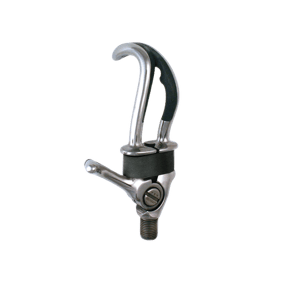
Since the age of eight, I have worn a prosthetic arm. At first it ended in a hook protruding from my right cuff, then a rubber hand and in more recent years–– a stiff brown glove. Sometimes I go empty-sleeved. That bodily abnormality has not resulted in limiting public access or even significantly impairing my functionality. (I do somewhat despair dying without ever having played a guitar). No less than 90% of any ‘disability’ I have incurred has been the wasted energy of reacting to the discomfort of strangers. In that regard, I identify much more with Joseph Merrick than with Stephen Hawking.
I am probably more self-conscious of my appearance than was Tatenda–– my ‘handsome-faced’ former student. I am certainly not as liberated as the young amputee comedians of today who wave their bare stumps with ease. That can be humbling for someone who is still jarred by his right-side profile in a mirror…
Yet now the old morbid self-consciousness hardly matters. Wrinkled, liver-spotted and beginning to stoop–– like fellow geriatrics on a busy street–– I am nearly invisible…
Incidentally, I have never been the least bothered by my baldness. Although having had a ‘cue-ball’ scalp since my late twenties, I have never been tempted by wigs, transplants or weaves. Perhaps absence of hair has always seemed insignificant in view of a much more noticeable ‘visible difference…’
I am nonetheless amused by the geriatric Trump’s obsession with his pathetic comb-over. Apparently, he fears that like the biblical Samson, the loss of his hair will result in the loss of his virility–– even in the downfall of his entire imperium. That superstition suggests a very different category of psychological disorder than any touched upon here. Possibly one of a kind…
-2025, November
 Coprolites in Amber (etc.)
Leave a comment