
When I turned seventy-fourth a few months ago, I received a video of three of my little grandkids singing “happy birthday.” Even though they stood a little stiffly and were urged on by their mom whispering in the background, I was touched. After the chorus, my daughter pointed her iPhone cam at each in turn for “a special greeting for Papa.” The 8-year-old and 4-year-old promptly offered sweet endearments. Last to take his turn, my 6-year-old grandson was momentarily silent. Prompted to speak, the non-conformist middle child softly queried: “Isn’t Papa old?” Looking quizzically at his mother, he further asked: “Don’t old people die?”
Attuned to my sense of humour, my daughter did not delete that off-script bit. Indeed, my grandson’s response brought to mind another little rebel, who more than sixty years ago whispered before his grandfather’s open coffin: “Is it true that bodies in caskets are dressed only from the waist up?”
As for the present, the hug of the 6-year-old non-conformist feels no less genuine than that of his two siblings. Yet ancient memory serves well enough to know that in a child’s eyes, my appearance is gradually transforming into that of an unwrapped mummy. Indeed, in my earliest impressions, old age appeared to be a horrible disease borne by some nameless curse.
My paternal grandfather was in his eighties before I was ten. I remember him chiefly for the ritual at his kitchen door on our obligatory Sunday visits. He would stoop to pat shoulders with a liver-spotted hand while offering a phlegmy greeting. Stone deaf, he would nod to each grandchild’s chirped response. With a cough or groan, he would then shuffle back into the living room. Apart from that doorway ritual, I do not recall exchanging a single word with the old man.
When I was born, that grandfather was younger than I was four months ago when my youngest granddaughter was born. If that little sweetie should come to know me only as I did my paternal grandfather––that may be karmic justice…
It wasn’t until teen years that I recognized not all geriatrics were dead between the ears. A few––like Picasso and Bertrand Russell–– were even regarded as living-legends. Yet I assumed that the minds of most old folk (whatever remained thereof) were largely fixed on the miserable state of their health.
It never occurred that the oldest men who wheezed up the village post office steps as late as 1966 could have rich memories stretching back to the 1890s… Many years later, I would imagine how I might have taped an interview with one. In an alternate past, I could have saved from oblivion a recollection from World War One–– even one from the Boer War… Yet in the non-alternate reality of 1966, I used my tape recorder for taping pop music and goofing around with friends. As for the old men on the post office steps––I shuddered in passing them. At fifteen, a budding Studs Turkel I was not.
Six decades on, I could natter at length about events remembered from my youth: from the October 1962 nuclear missile crisis to hippiedom and beyond. Should I ever be asked by a grandchild to help with a social history project I will gladly comply. Yet I would have no illusions about genuine interest in my recollections. In the shuffle towards oblivion, I expect to be increasingly humoured, sometimes patronized but generally ignored. My kids may remember a few droll stories I have too often repeated. My ‘precious’ memories, however, will no more endure than the dreams of our Neanderthal forebears. So it eternally goes…
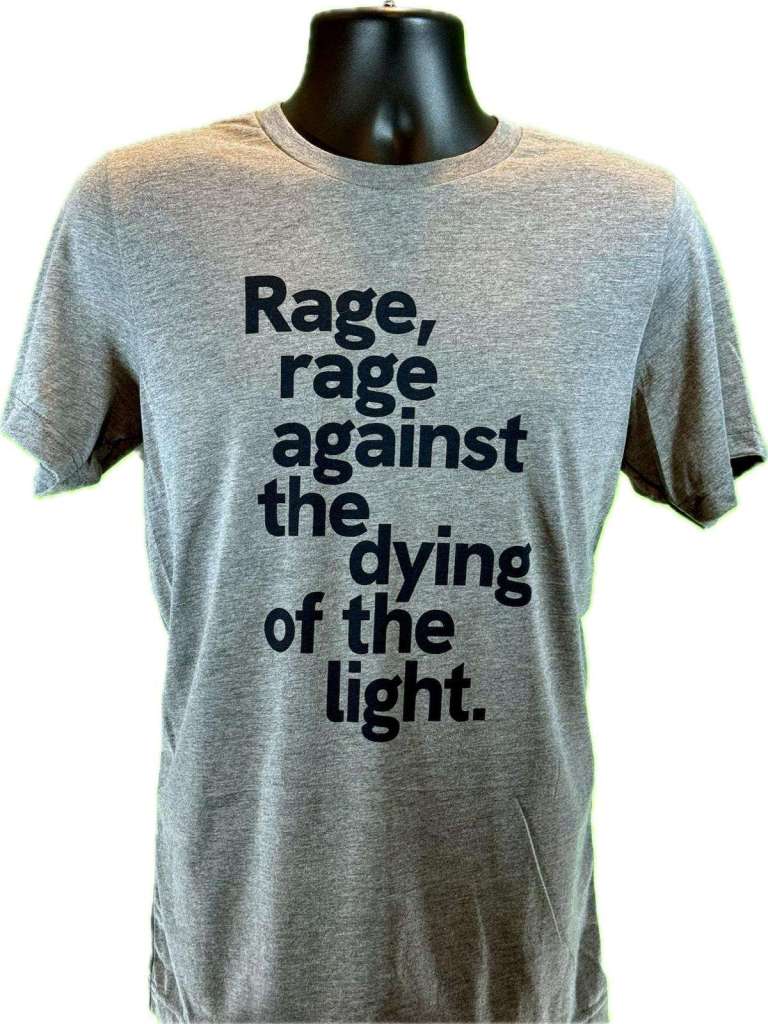
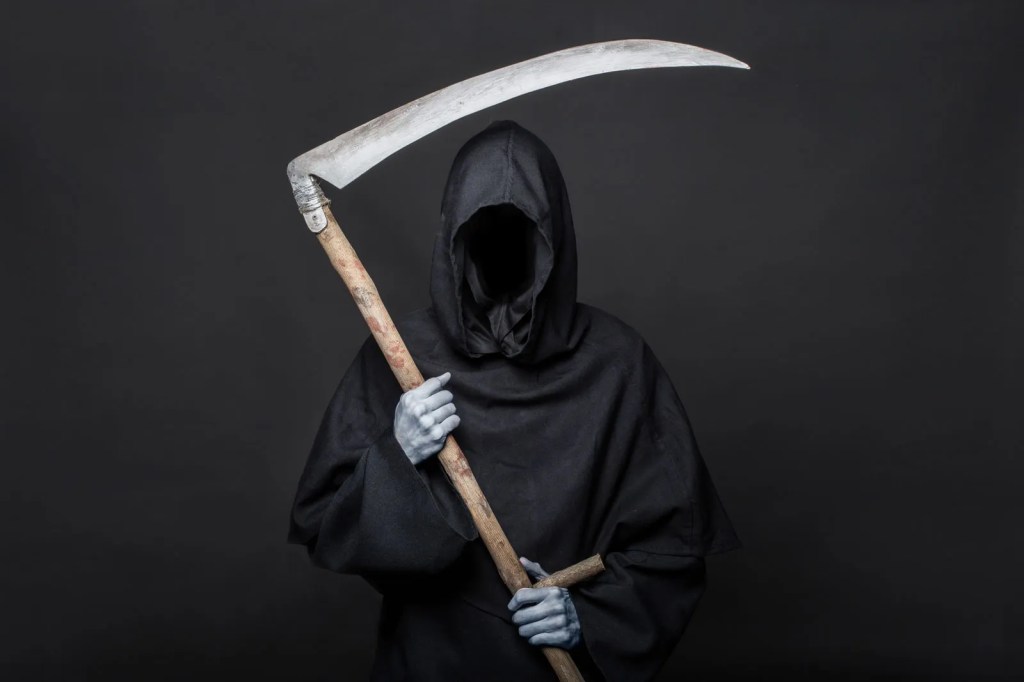
Despite an irrepressible morbidity, I never cease to marvel at my luck in making it to seventy-four, largely unscathed. At a reckless sixteen, I did not expect to make it to thirty–– let alone to procreate. So far, I’ve escaped overnight hospital stays or need for a pill dispenser. According to my Oura ring, I do no less than 10,000 (relatively brisk) steps daily. Still, I’ve never played a sport nor followed an exercise plan. I spend far too much time on my ass. Yet somehow–– I’m still dodging the Reaper.
Of course, the wear and tear of three quarters of a century are obvious: stiffer joints, weaker bones; overgrown prostate. I nod and smile more often in feigned comprehension but believe I am not yet as deaf as was my octogenarian grandfather.
As for mental sharpness–– that is for others to judge. My absentmindedness is getting no worse. I misplace things, but my wallet has never recently turned up in the refrigerator–– as it did once a couple of decades ago. The brain-freezes that sometimes leave words stranded on the tip of the tongue are no more frequent. In bemused curiosity, I have taken the online MoCA (Montreal cognitive assessment) test but unlike Trump––I would never brag of “acing it.” I feel no need as yet to do the crossword puzzles which apparently stave off dementia in ninety-five-year-old nuns…
While I probably can ‘ace’ quizzes on current affairs, my familiarity with popular culture is deeply fossilized. I know nothing of younger film stars and am willfully ignorant of pop music genres post 1990. Yet I am a masochistically dedicated follower of the news. Judging from the medication ads on cable news networks and on my internet feeds–– that pastime is shared with many fellow geriatrics…
In recent years, phone chats (aided by earbuds) with old friends are increasingly given to politics. We take special pleasure in indignant rage. I try not to repeat myself–– a habit frequently noted of my friends. When the topic invariably shifts to declining health, I try to avoid speaking of mine. Yet to a younger person, I would probably sound no different than any geezer shaking a fist at a world assumed to be growing ever more inhospitable…

In the old sci-fi movie, ‘Soylent Green,’ the geriatrics of an overpopulated and environmentally poisoned earth, volunteer for euthanasia. Sweeping music and projected scenes of stunning natural beauty accompany the procedure. Immediately thereafter, their bodies are processed into protein wafers for the masses… In ‘‘Logan’s Run’, another dystopian ‘B’ movie from the 1970s, the remnants of humanity enjoy free love until reaching the age of thirty. Thereupon, each individual submits to being ritualistically ‘terminated.’ In such a world, a 75-year-old would be a life and a half beyond expiry date…
Both these old movies came briefly to mind before recently rereading: ‘Why I Hope to Die at 75.’ The essay, by renowned American oncologist, Dr. Zeke Emanuel, first appeared in 2015 in ‘The Atlantic’. Emanuel made the case that staying vigorous up to the point of dying at seventy-five is a far better fate than enduring additional years in miserable decline. He writes: “I think by 75 you’ve lived through the full arc of life… You’ve made a career and had a family. That seems like a great life to me, so why run the risk of dementia, drooling, and being a burden to your family?”
Unfortunately, the stats don’t lie. For the majority who live beyond three-score and ten–– from the mid to late seventies their quality of life deteriorates from tolerable to downright shitty. Of course, the rate of decline varies by genetics and lifestyle. Yet the hard truth is that very few make it to ninety with intact marbles and bowel control. As much as we are inspired by a Grandma Moses or a Bernie Sanders–– the ‘superager’ outliers are much rarer than we like to believe.
In his controversial article, Dr. Emanuel made a personal commitment: He revealed that after the age of seventy-five, he intends to decline curative treatments. That would extend from foregoing heart surgery to even stopping meds for high blood pressure. He stated that he would still avail himself of palliative medicine, as needed. Should he suffer a stroke–– he expressed confidence that his clear instructions on non-resuscitation will be followed.
To be clear–– Dr. Emanuel was not making a case for snuffing it at seventy-five. He hoped that at that age, he will still be healthy enough to enjoy a few more productive years without medical interventions. The larger point in his essay was that geriatric life extension by costly pharma and high-tech treatments too often results in extension of misery. His appeal was for more humanistic geriatric health care in America. That would prioritize preventive medicine for increasing health-span, and compassionate support through the declining years…
While impressed by Emanuel’s argument, I noted his age when he wrote the piece. He was only fifty-seven. At that point, he had an eighteen-year cushion before his arbitrarily set crunch time of seventy-five. Eleven years later–– has he changed his mind?
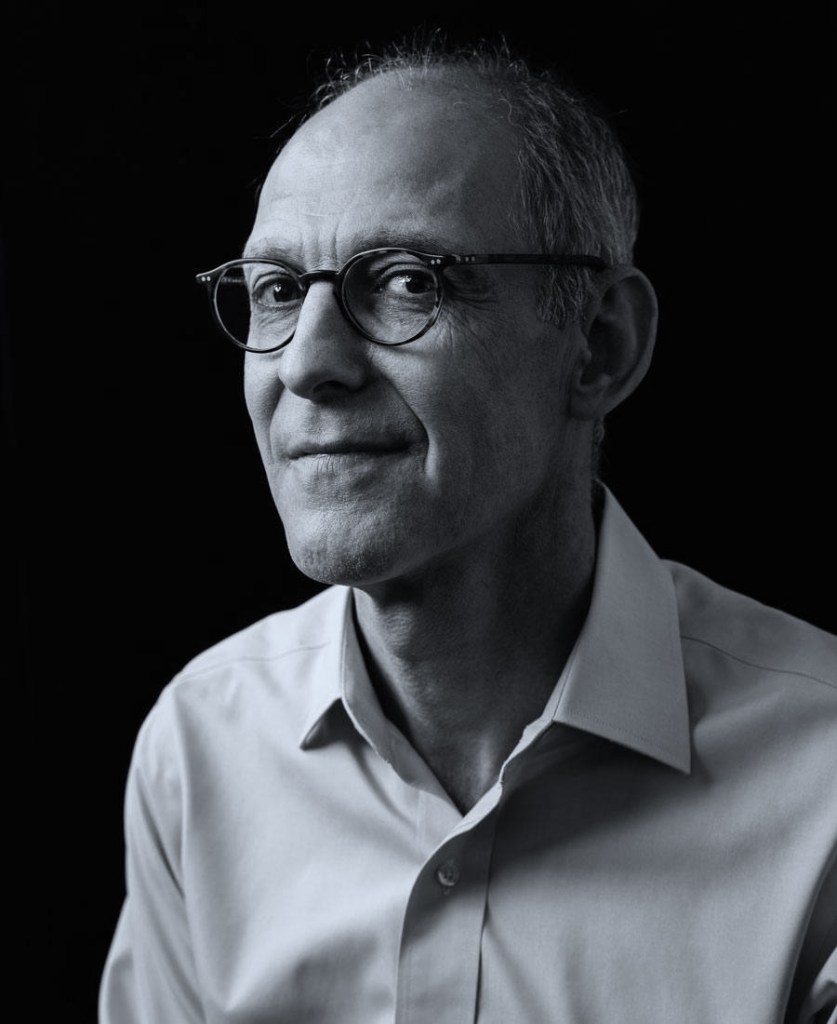
A rather youngish looking 68-year-old in recent photos, Dr. Emanuel’s focus has apparently shifted to that of a “healthy aging” expert. He’s very recently published: ‘Eat Your Ice Cream Six Simple Rules for a Long and Healthy Life’ (2026). In a recent interview, he stated that he continues to oppose aggressive efforts to prolong life for the elderly. He gave no definitive answer on whether he still intends to follow through on his controversial declaration of eleven years ago. Still, he insisted: “The point of life isn’t to live longer — it’s to live a fulfilling life.” Perhaps that can also be taken as a gentler reminder that there still is no ‘cure’ for old age…
Meanwhile, a ‘cure’ for aging is being aggressively pursued by well-funded research. In the field of genetics, the pathway is supposedly through the potential reversal of the aging process in human cells. The tantalizing theory is that a human cell could potentially be engineered to reproduce as long as one of a bristlecone pine. Prominent in such research is Dr. David Sinclair at the Harvard Medical school. His work in cellular epigenetics has led him to conclude that aging is a “treatable disease.” His goal is to develop therapies which could indefinitely stave off the Reaper. Through his biotech startups, Sinclair is already promoting (very pricey) anti-aging supplements.
It is not at all surprising that Sinclair’s work is promoted by the billionaire tech bros of Silicon Valley. In the technocratic future of their dreams–– aging may be envisioned as a disease only affecting the poor. In such a world, the poor might even be regarded as a source of some ultra-processed version of Soylent Green…
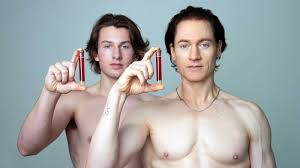
Even creepier in the pursuit of immortality is American entrepreneur and venture capitalist, Bryan Johnson. Though his specialized anti-aging therapies, the crypto billionaire expects to live until 2150. He recently generated controversy by transfusing the blood plasma of teenagers into his middle-aged body. His teenage son was a primary donor. The American FDA deemed that vampiric longevity therapy was both useless and potentially harmful.
Johnson’s photo shows grey-free hair, perfect teeth and eerily tight skin. His eyes, however, may remind one of a portrait of Dorian Gray. Customized therapies may soon be available for keeping uber-rich bodies youthful for a century and a half. But as with Dorian Gray–– the shrivelling will go on within…
I am surely far from alone in remembering the panic at reaching twenty-five without a clear career path. Then at thirty there was the sobering loss of any remaining claim to youth. At forty, came the shiver of entering middle age… thirty-four years ago!
Five years ago, I compiled my reflections on the approach of the traditional lifespan of three score and ten. In the introduction to the ‘Endspec’ postings on this site, I wrote: ‘Sixty-nine years is certainly enough time for a person to make a mark on the world, if that be his/her destiny…’
It was plain that “making a mark” had not been in the cards for me. It was plainer still that after seventy, I ought to make the most of what remains–– however haunted by what was pissed away…
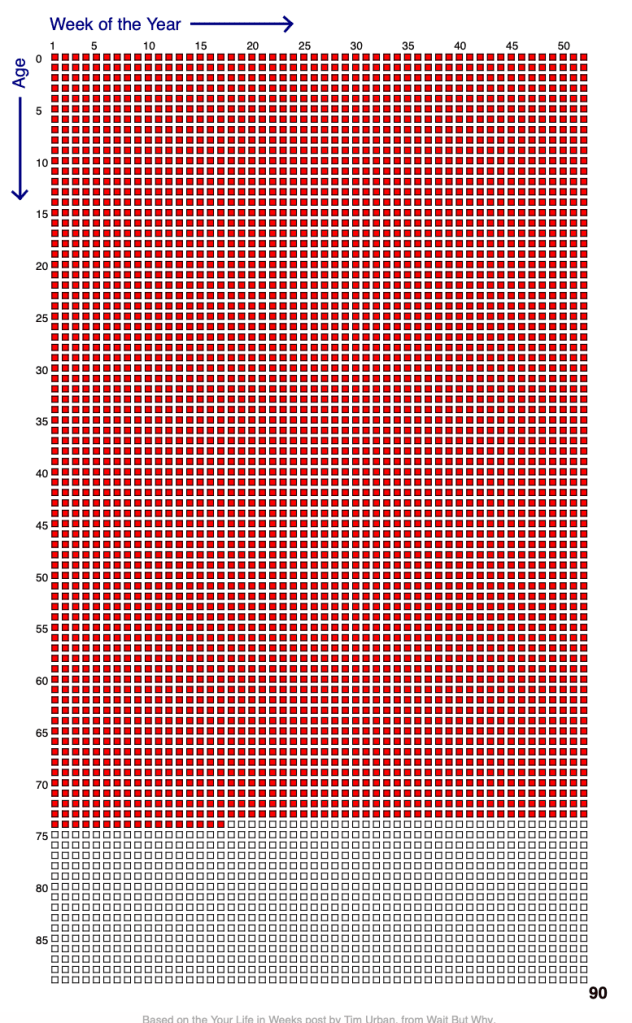
I am not a devotee of time-management gurus like Tim Urban but appreciate tools like his ‘My life in weeks.’ I am equally jarred and sobered by mine. The chart shows that 226 weeks have already passed since turning seventy–– much of that time squandered. Only 294 weeks remain before the age of eighty–– should I be lucky (or unlucky) enough to live that long. Given the odds of steepening decline ––how much of what’s left will likely be ‘quality time’? Ten deep breaths are needed before speculating on that …
Having been so far spared a major health crisis–– I cannot predict how I would react to one. In a relatively healthy present, it makes perfect sense to opt for palliative over curative treatment. Yet I wonder whether in facing the snapping jaws of death–– even a 75-year-old Dr. Emanuel would refuse ‘heroic’ medical rescue…
Far closer to heart, are the examples of old friends. Too many of them have already been blindsided by heart disease, stroke or cancer. Nearly all of them chose medical interventions to which in better times––they probably would never would have imagined submitting. Through surgeries, chemo and radiation–– they suffered terrible side effects. Faced with sheer mortality–– their boundaries of tolerability kept shifting… But they bought more time.
For my own prospects, I wonder: what could be the justification for accepting curative treatments after seventy-five? In addressing that question, it seems there is first a need to dispel a measure of self-delusion:
The limited future will be much like the past–– except with increasing humiliation. The loose ends will never be tied up. Some unexpected revelation or redemption is highly unlikely. On the positive end of the scale, there could be more time with loved ones. If dulled of physical pain, the mind could still give pleasure. Not to be underestimated is the reprieve of holding a little longer in abeyance––lights out forever…
Meanwhile, the stark truth is that health care systems are already swamped with the infirm elderly–– many of whom require intensive care… Even with our insistence that we have earned our right to care by having “paid into the system,” we geriatrics must rely on the good will of the young. Unfortunately, dystopian solutions for easing the tax burden may increasingly become more palatable. Perhaps some of us will live long enough to be processed into protein bars…
At this point, I would rather sidestep the elephant in the midst of this topic–– medically assisted suicide. Notably, Dr. Zeke Emanuel is opposed to it. Along with the slippery slope objection, he regards MAID (the polite Canadian acronym) as a societal cop-out for failing to provide adequate support for the chronically infirm and the dying. I tend to agree with that assessment but would never deny the choice to those who desperately need it. There but for the grace of the cosmic lottery…
The best hope, as it was before modern medicine, is to die at home in one’s sleep or be felled by a “good, clean stroke.” That expression of bygone days reminds me of another heard long ago in my native province. For those whose lights were doused suddenly it was sometimes said with a trace of envy: “He sure got out of ‘er easy!”
If I make it through the next 33 weeks to seventy-five, I will probably continue to take my blood pressure meds. Even a knee surgery after the mid-seventies seems no less justifiable than new shocks for a vintage car. Yet I hope to draw a line before chest surgeries, breathing or feeding tubes. It may be old-fashioned, but I would dread dependence on Depends…
Until nailed by actuarial probabilities–– I hope to continue in my retirement delights: five-finger piano, daily dog walks, early morning tea and occasional craft beer. Even in decreasing fluency in composing readable text–– I hope to keep posting on this site…
For as long as possible, I also intend to keep a few practical promises. These include not mumbling to myself––especially in presence of grandkids; not wearing sweatpants pulled up to the middle of the chest; avoiding the dribbling of food or drink and making sure the zipper stays pulled up…
As regards those astronomical odds-beating super-agers: auteur Alejandro Jodorowsky, age ninety-six, recently completed a two volume Taschen art monograph. The writer-director of the surrealistic midnight movie classic ‘El Topo’ (1970) proclaimed in a recent interview: ‘Soon I will die. And I will go with a great orgasm.’
An inspiring thought.
–2026, February
 Coprolites in Amber (etc.)
Leave a comment