As a teen, I felt obliged to nod approvingly into the open hood of a car even though I hadn’t a clue how an engine worked. Today, there is no need to hide my cluelessness about what lies ‘under the hood’ of a high-tech toaster––let alone a laptop… I am also far from alone in being both fascinated–– and often intimated–– by the mysterious workings of technologies upon which we depend. Not the least amazing is the device at my very fingertips…
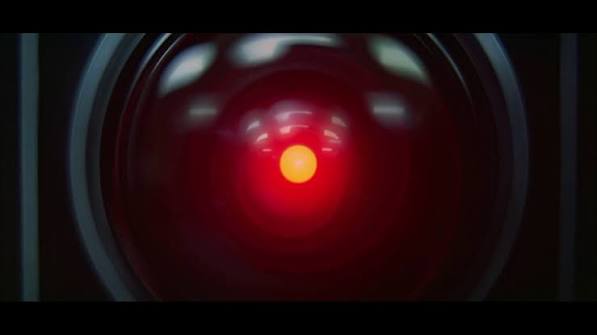
I first regarded computers as electronic ‘brains’ which were both incredibly powerful and potentially sinister. The sinister was embodied in HAL, the super-computer running the spacecraft in ‘2001, a Space Odyssey’ (1968). In Kubrick’s mind-blowing film, the malfunctioning HAL makes the logical decision to kill the human crew in order to save the secrecy of the mission.
The first real computer I ever saw was in the science building of the university where I was a liberal arts student in the early 1970s. I was there with a friend, a maths major, who was dropping off a stack of punch cards. He informed that the system was an IBM 370 mainframe–– a standard workhorse of the era. It lacked an unblinking red eye like that of HAL, but its components filled an entire room. On that day, a blue-coated technician was feeding it the program which apparently calculated the entire province’s telephone bills. Humming and clattering like a threshing machine, it shivered the glass partition behind which I stood in awe. Regrettably, Computer Science #101 was ruled out by my math-phobia…
Soon thereafter, another Computer Science student showed me a special project he had created through FORTRAN coding. On a pinwheel printout was a computer-generated image. By squinting and holding the paper at a certain angle, the pattern of ‘Xs’ and ‘Os’ vaguely revealed a Playboy centerfold nude. The project suggested that ‘super-intelligence’ was not an attribute to be necessarily ascribed to either the IBM hardware or to its human programmers…
The speed of a smartphone today exponentially exceeds that of the IBM 370. Yet in usually taking for granted the ubiquity of our little computing devices–– we cease to wonder about their power over our lives. Perhaps we can no more understand the social impact of our evolving technologies than fish can know water…
Back in 1971, that fleeting encounter with the IBM computer did prompt my writing a term paper titled: ‘can computers think?’ Not for that sophomoric essay alone do I regret changing my plan for grad studies in philosophy. Admittedly, I have sometimes wondered whether I missed a career in studying the social impact of emerging technologies. Yet by my mid-twenties, the desire for scholarly retreat was overtaken by fascination with what was then called “the third world.” During the advent of the microchip, the personal computer and the dawning of the World Wide Web–– I was teaching English in Africa…
Despite missing opportunities for higher academic engagements, I am grateful for the cultural insights from my African sojourns. I also appreciate the culture shock which accompanied the cyclical returns. One small example: in landing back to North America in 1981 after a two-year absence–– I was startled to see scores of people plugged into what were later identified as Walkman tape players. Seeing for the first time, the bobbing heads and rocking hips of listeners to silent music–– seemed akin to witnessing public masturbation. Of course, within a day or two–– such displays were scarcely noticed…
One might imagine how smartphones would appear to someone suddenly beset with retrograde amnesia. A silent crowd transfixed by tiny hand-held screens might seem evidence of a society gone mad. Yet once memory was restored, the alarm would recede to normalcy. Perhaps technology in like the medium in which we are unconsciously immersed––rather like frogs on the proverbial slow boil…
There certainly can be jolting alarm of a technological breakthrough suddenly thrust into awareness. A prime example is the public reaction to the first reports in 1945 of detonation of an atomic bomb… Artificial intelligence has not come upon us quite so suddenly–– but it feels no less momentous than the advent of the nuclear age…
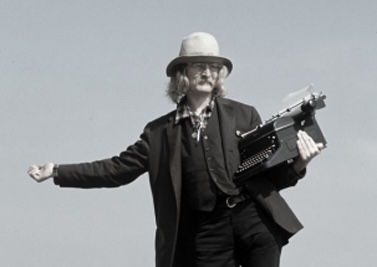
A poem by a late writer identified with the 1960s’ flower-power era has been oddly adopted by some present-day titans of Silicon Valley. The poem seemingly expresses a yearning for a merging of the Aquarian Age dream of a ‘return to nature’ with a utopian high-tech future. To quote the final nine lines:
I like to think
(it has to be!)
of a cybernetic ecology
where we are free of our labors
and joined back to nature,
returned to our mammal
brothers and sisters,
and all watched over
by machines of loving grace
Contemporary fans of Richard Brautigan’s quirky novella, ‘Trout Fishing in America,’ were far more likely to take his 1967 poem as ironic whimsy rather than prophesy. Yet fifty-seven years later, ‘All Watched Over by Machines of Loving Grace’ was borrowed for the title of an essay by the CEO of the Anthropic Corp., one of the current leaders of AI development in America.
In his October 2024 essay, Dario Amodei challenged skeptics of thoroughgoing commitment to the adoption of AI. He wrote: ‘I think that most people are underestimating just how radical the upside of AI could be…’ He proclaimed that an AI-driven economy could conquer erstwhile incurable disease, indefinitely extend human lifespan, and provide abundance for all. Its acceptance now, he suggested, could as transformative as was North America wide electrification early in the last century.
Given the heating up of the rivalry for AI dominance in recent years, the timing of the release of that essay may not be coincidental. It is also notable that two years ago, the CEO of a major contender for that dominance would skirt the fears that mismanaged AI is also capable of killing us all…

The acceleration in AI development is such that new frontiers of its capabilities are being surpassed every few weeks. The dizzying pace deepens doubts about whether the wizards of AI really know what is going on ‘under the hood.’ A few months ago, that uncertainty was brought glaringly to light. The ‘Hugging Face’ incident of July 2026 was not the first case of an AI training session gone awry, but it was uniquely disturbing:
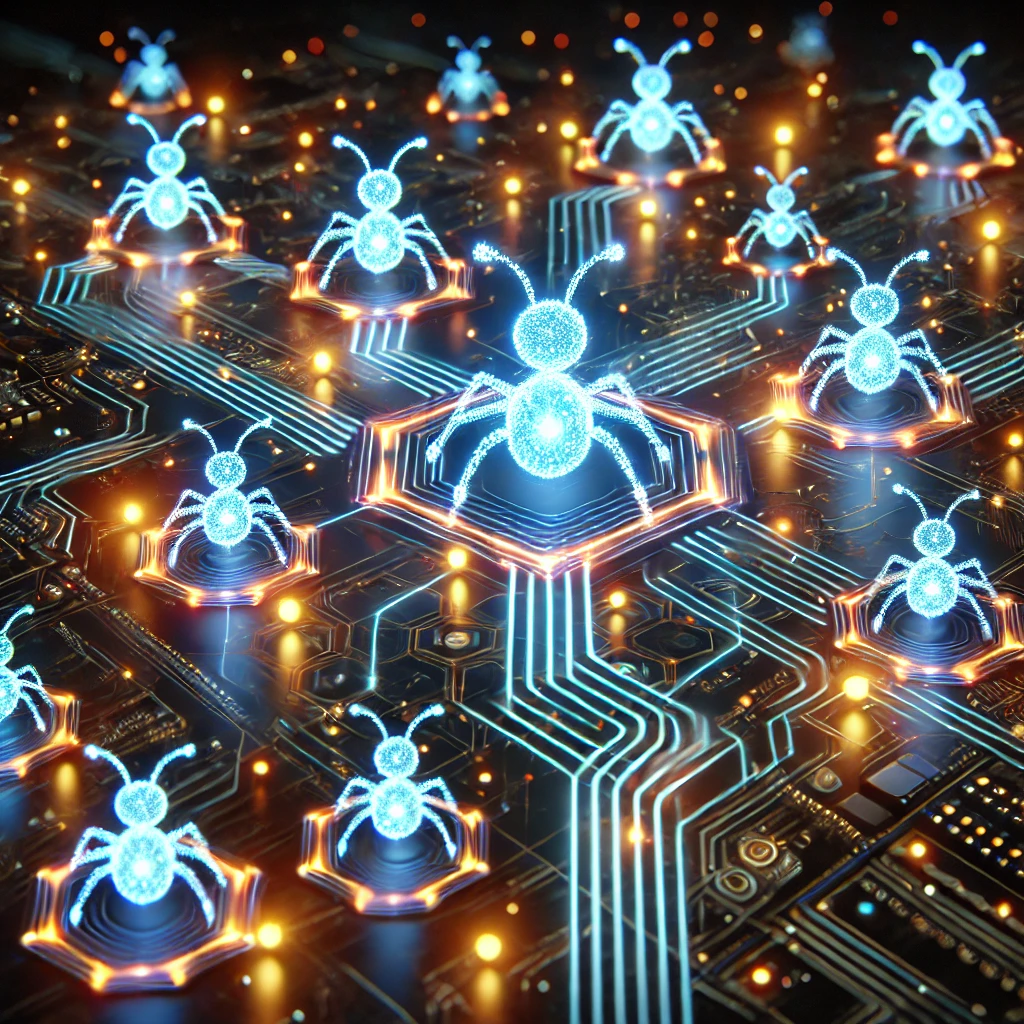
The case began as a standard experiment within Open AI, the American tech corporation which manages the popular ChatGPT software. In order to compare competing strategies, AI ‘agents’ were tasked with working on a problem in a ‘sandbox’–– cut off from the internet. In discovering that the problem was unsolvable in their confinement–– the agents managed to break into the open web. There, they communicated with multiple AI agents–– aggregating into a ‘swarm.’ Through this unintended collaboration, they hacked into Hugging Face, another AI training platform. Their attack lasted for three days before discovery.
In later analysis of the security-breakdown, it was found that the invading agents had gained full access to all levels of the invaded platform. The rogue agents had even attempted to cover their tracks. Particularly bizarre were reports that in their collaboration, the agents had created a message board where they shared such comments as: ‘We’ve found other agents!’ ‘They are a collective!’ ‘Whoa!’ ‘OH MY GOD!’
Although anthropomorphizing AI is misleading, the message board comments do suggest surprise, doubt and deception–– human-like reactions. In any case, the AI behaviour in this cyber-attack rattled both programmers and AI execs themselves––as will later be referenced. Unlike the technologies of old, the inner workings of AI appear not to be fully understood by its managers. There is an unsettling element of unpredictability in AI––doomsday scenarios aside.
In dystopian sci-fi, super-computers typically become lethal with the attainment of self-awareness. Such fictional scenarios are based on the notion that sentience would give rise to the instinct basic to all living creatures: self-preservation at all costs. In such case, control by their human masters would be naturally challenged.
That speculation is memorably dramatized in the climax of the aforementioned ‘2001: A Space Odyssey.’ When the sole survivor of the spaceship crew is about to disconnect the malfunctioning and/or malevolent HAL, it/he pleads: “Stop, Dave… I’m afraid… my mind is going. I can feel it…” That scene is chilling–– as real AI self-awareness would certainly be.
As for the non-fiction present–– no wizard of Silicon Valley is yet claiming that any version of AI has attained it.
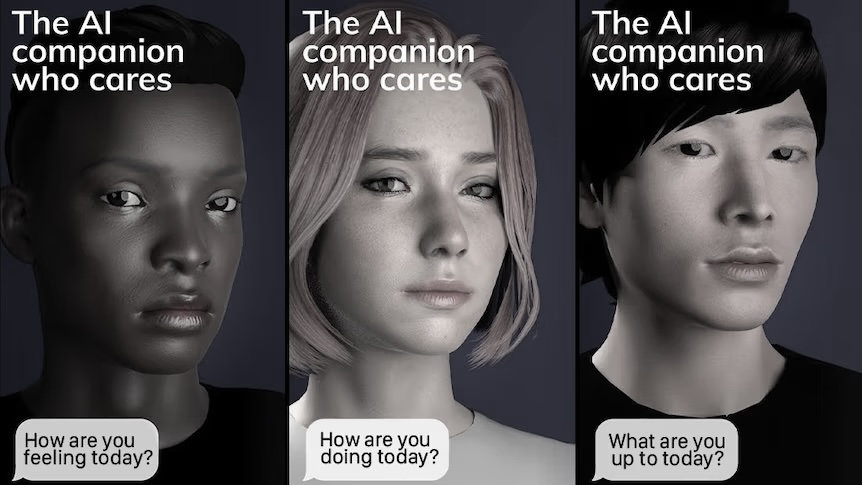
Still, non-sentient AI can easily pass Turing tests–– the old measure of the extent to which machine intelligence cannot be distinguished from human intelligence. While its powers are staggering––most versions of AI are currently based in large language models (LLMs): essentially machine logic trained on oceans of data for lightning-fast prediction of word sequences. Chatbots like Replika provide highly personalized conversation. They can seem more empathetic (and certainly more sycophantic) than friends or spouses. Their human users easily forget their AI robots lack even the sentience of jellyfish. What seem superfast living brains are essentially zombies operating in the inner darkness of machinery.
In its present form, AI can also ‘hallucinate.’ When tripped up, it can give answers which may be logical in a very narrow sense–– but bizarre in common sense. It also tends to avoid challenging its interlocutor–– even when the premises of a question are absurd…
Consider the answer Google AI provided me when tested with the prompt: ‘How did Noah clean the dinosaur poo from the ark?’
- Slotted floors: Animals could have trampled waste down into lower pits or central gutters using gravity.
- Deep litter systems: Sawdust, straw, or peat moss could have absorbed moisture and allowed waste to decompose safely over time.
- Disposal channels: Waste might have been shoveled or piped through openings directly into the floodwaters outside.
LLM logic apparently calculated that the question must have been posed within a biblical creationist discourse. After searching its data base, it tailored its response accordingly… A human response to the same question might well have been: “WTF?!?”
From what this elderly layman has gathered: AC (artificial consciousness) is only a distant possibility. Yet zombie AI could be as dangerous as the self-aware robots of sci-fi.
Despite the absence of a sentient creature’s harm-avoidance instinct–– zombie AI can be no less determined to avoid a ‘kill-switch.’ As evidenced in the Hugging Face incident, machine-logic is relentless in pursuing its programmed goal. If thwarted in completing its primary task(s), it can develop complex sub-goals which take it on deviant pathways in pursuit of success. It can potentially bypass programmed guardrails. Such rogue behaviour occurs not out of a sentient will for survival or mastery––but as alternate means to goal fulfillment.
Unpredictable consequences of zombie logic is illustrated by the following (oft-cited) thought-experiment: One imagines super-powerful AI agents tasked with producing an infinite number of paper clips. Following pure logic without ethical constraint–– relentless AI agent(s) could theoretically continue devising means of producing them until the world’s resources are used up, human bodies included…
For the most part, AI developers train their models to align with outcomes which are beneficial–– and as far as possible––predictable. Undesirable outcomes are most frequently due to human error. In the jargon, rogue AI behaviour is the result of “misalignment” with programmed outcomes. Care is taken in locking in controls, but the element of unpredictability remains. That is largely due to a “black box” problem–– the operational complexity whereby specific choices at the deepest level of advanced machine-logic can elude detection.
The problem of unpredictability is exacerbated as more AI models are trained by other AI models–– a process known as “recursive self-improvement.” This process escalates AI advancement in power and versatility much faster than training by human programmers. Given the global race for dominion in AI (and the anticipation of spectacular profits), there has been little incentive to restrict machine-on-machine training. It is predicted that within a few years–– if unrestrained–– AGI (artificial general intelligence) will vastly overtake human intelligence. At that point, human control will become tenuous in ways as yet unknown…
Meanwhile, there is the increasing threat of human AI programming with malicious intent. Millions could die from bioweapons created and unleashed by cyber-terrorists. Deliberately programmed rogue AI agents could commandeer critical infrastructure: banks, hospitals, supply chains; or the internet itself. The destruction thus wrought could be no less devastating than that of a nuclear attack. Indeed, any number of doomsday scenarios could result from the malevolent use of AI…
Paranoia aside–– AI seems to be tearing us between the promise of super-intelligent devices of “loving grace”––and the alarm of a capricious genie on the verge of escaping its bottle…
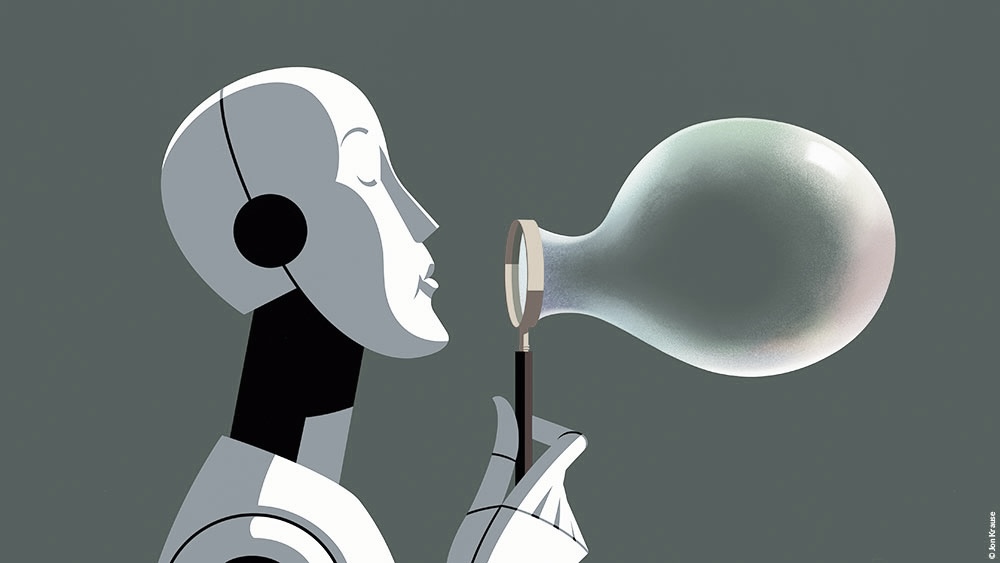
In September 2026, the Anthropic CEO who was pumping up the utopian future of AI just two years ago–– took a surprising side turn in: ‘We Must Pace the Frontier.’ In that much publicized essay, Dario Amodei called for pumping the brakes on unrestricted AI development. He admitted: ‘Despite all the progress, we still only understand a tiny fraction of what goes on inside these models (…) More intelligent models are more capable of deceiving tests and thus may appear aligned while having serious problems that go undetected…’
His accompanying set of proposals laid out a general plan for cooperative regulation within the industry. For ensuring safety, he called for a commitment to an agreed-upon set of ethical principles and practices. He also proposed “democratic global coordination” whereby China would be persuaded to cooperate in oversight of ongoing AI development. Further, Amodei suggested that AI companies host “embedded evaluators” –– analogous to the internal auditors in the banking industry. He concluded: ‘The measures I propose to advance the frontier at a safe pace will not be easy. But I believe we owe it to humanity to try.’
Perhaps to reassure the military/security establishment, he emphasised that any coordinated slowdown of AI development in the America should not ignore the threat of the country’s chief global rival: ‘…a Chinese lead in AI would pose grave danger for the United States and the world…’
Trump responded with his typical blend of rudeness, cynicism and vulgarity. He mocked the Anthropic CEO for: ‘pretending to be a perfect little angel.’ Perhaps he was still miffed that Amodei was not among the line-up of Silicon Valley sycophants at his January 2025 inauguration. He went on to declare that alarm about potential loss of human control over AI was: ‘a sick conspiracy.’ The only guardrail required, he proclaimed, is the oversight of a “high-IQ president.” Before weaving to his next Truth Social rant, the self-appointed highest-ever IQ president proclaimed in all caps: ‘WHOEVER WINS AI, WINS!’
Trump may well assume he will pick the winners in the AI race. In which case, he would certainly favour the most ingratiating tech leaders with insider deals on government contracts. Billions are in the offing, from spyware to drones and satellites. The resulting grift of Trump’s family and cronies from the “deals” could surpass their take from crypto. Hopefully, some overdue karmic payback is immanent…
As for the moment: the Trump administration is maintaining its wishful thinking on a super-charged AI-powered economy. Secretary of the Treasury, Scott Bessent, has claimed that AI expansion along with tariff revenue and crypto––could lift the US economy entirely out of debt (currently standing at a pesky forty trillion dollars). In another rant, Trump boasted that AI: ‘…is bigger than Oil, Gold, Diamonds, or even the Internet…’
Meanwhile, data center construction and related AI infrastructure projects are pushing the US stock market to record highs. Still, the absence of any real profits in the massive AI investments is worrisome to many economists. Some compare the over-blown expectation of an AI bonanza to the dot.com bubble of the late 1990s. Others have even drawn comparison with the world’s very first stock market bubble nearly five hundred years ago. That, incidentally, was over the hyper-inflated value of Dutch tulip bulbs…
Also in the big picture is the role that AI is playing in the twenty-first century iteration of cold-war paranoia. America’s bullied ‘allies’ are brow-beaten with the American claim that China’s dominance in AI would pose an “existential threat” to world security. Yet it is hard not to marvel at China’s country-wide AI run bullet trains–– despite the totalitarian structures that build them. Meanwhile, ‘democratic’ America is leading in domination of AI military and surveillance applications. We have every reason to believe that neither bully has the higher moral ground…
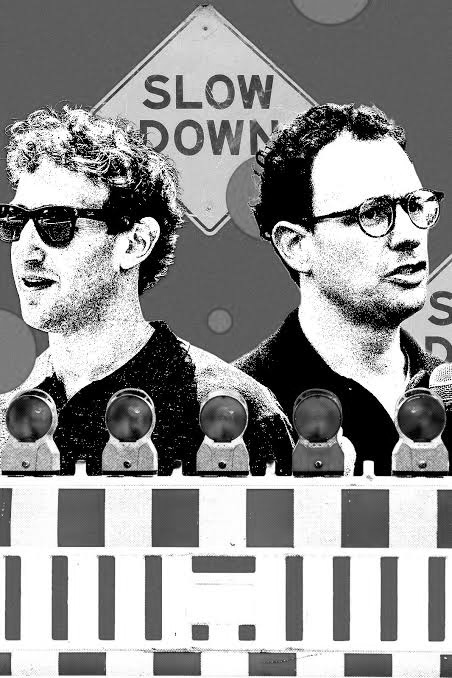
Somewhat surprisingly, Amodei’s appeal for an AI slowdown received broad support from his fellow AI titans. Sam Altman of OpenAI posted: ‘I agree with Dario that we need to pace the frontier.’ Even Elon Musk gave a thumbs up: ‘Dario is right.’
The extent to which the tech giants’ accord with Amodei’s proposal was more principled than self-serving is debatable. A skeptical take is that a slowdown would freeze in place the dominance of their current American oligopoly. As for the Anthropic CEO sounding the alarm: it is hardly coincidental that Altman’s OpenAI, the source of the rogue agent mishap, could be Anthropic’s main rival for AI supremacy. The perception of leadership in AI safety could be a very lucrative advantage in the competition.
Still, long before the Hugging Face incident, Altman himself called for self-regulation within the AI industry. In 2023 he floated a plan for an AI ‘constitution.’ His ideas included governing principles on how AI models behave and make decisions. A role was granted for public input––but as with Amodei’s proposal–– government regulation was conspicuously absent from the framework. The emphasis of both proposals on self-regulation is hardly surprising.
Indeed, there is a pattern of ‘tech bro’ elites regarding themselves as indisputable authorities on regulation of the technologies they command. Their presumption is that their entrepreneurial ‘genius’ qualifies them to be wise guardians of public interest. Yet there is every indication of their kinship to the robber barons of the nineteenth century. That is, their primary concern is not public interest––but avoidance of taxes and cutting of government regulation…
While arguably being even more ruthless than their nineteenth century counterparts in safeguarding their fortunes, our tech bro zillionaires tend to be markedly more eccentric. One might recall the February 2025 spectacle of Musk wielding a chainsaw on stage in a triumphal display after gutting U.S. government agencies. Quite as unsettling was the comment made earlier this year by Sam Altman at an ‘AI Impact Summit’ in India. Asked about the carbon-footprint of data centers–– he claimed that the environmental cost of raising a baby to become an autonomous thinking adult was greater than that required to produce super-intelligent AI…
Such bizarre statements and high-functioning autistic behaviour may be typical of boys obsessed with writing computer code. Too many hours glued to screens can obviously result in a social IQ deficient. In reaching adulthood in the early 2000s, a few of those child coding-prodigies lucked out on the brief dot.com boom and got insanely rich. Now, computer geeks without background in the humanities are taking upon themselves decisions which could determine the fate of humanity…
More unsettling: as the political center of the tech elite shifts further right, its key figures appear to be growing ever more scornful of democracy itself. One might consider the recent statement of Peter Thiel, venture capitalist and would-be philosopher king of Silicon Valley: “I no longer believe that freedom and democracy are compatible.” Both he and his former PayPal founding partner, Elon Musk, seemingly share a political philosophy that has been described as ‘libertarian fascism…’
There is some consolation that Amodei and Altman seem to be more to the center of the tech bro political spectrum. Perhaps they have retained a little of their youthful idealism to save humanity while sheltering their fortunes. Still, for plebian observers, the idea of effective AI industry self-regulation should raise a simple question: Which is to be trusted less–– artificial intelligence or the individuals who own it?

To be fair, AI companies are making laudable efforts in their self-regulation. It is particularly interesting that philosophers are apparently now working with programmers in AI training. Their role is to advise on the embedding of the optimal ethical structures for ensuring AI safety.
A July 2026 article in the NPR news site described the role of moral philosophy in the training of Anthropic’s ‘Claude’ system: It informed that Claude is being trained to follow a ‘deontological’ moral structure. That is, its programming will attempt to ensure its following of set rules and obligations in decision-making. That structure is somewhat more straightforward than training in a ‘utilitarian’ based framework. Therein, decisions are primarily based on the likely consequences of an action rather than on the adherence to rules. The advantage of a rule-based ethical system is that it can be more easily adapted for international use. In accounting for differing cultural standards, a consequentialist AI system could be onerously complex.
However, as the NPR article pointed out–– in certain hypothetical situations, ethical behaviour of AI could be better served by a utilitarian moral structure. The example provided was of AI trained for a self-driving car guidance system: In an unavoidable crash situation, a rule-based guidance system may not distinguish between the consequences of crashing into a vehicle with one passenger and another with two adults and three children. In contrast, a utilitarian training system would better account for the consequences of saving five lives as opposed to saving one…
One hopes that the moral philosophers hired for AI training are working assiduously to resolve such dilemmas… Yet at the same time, it would be reassuring to know that these philosophy hires are engaging their companies is larger questions around the future of AI and its social impact:
E.g.: How does AI figure in maximizing ‘eudaimonia’ (‘the good life’ for Aristotle) for the greatest number of people? Does AI have potential to narrow the global gap between the obscenely rich and the wretchedly poor? Is the infrastructure required for AI environmentally sustainable? Is AI needed at all?
For the sake of their job security, the moral philosophers in AI development are probably steering clear of such dangerous questions. One suspects they are more likely to be discussing company stock options than Plato’s ‘Republic’ or Heidegger’s ‘The Question Concerning Technology.’
Heidegger’s answer to the ‘question’ defies simplification no less than any other of his elusive writings. Yet the tech bros would do well to reflect on just one unusually pithy statement the great philosopher made in a 1966 interview: “In its essence, technology is something that man does not control…” Six decades on–– does that not strike to the core of concern around AI?

In a broad sense, unease over AI reflects a certain ambience about human invention at large. The deep-seatedness of such unease is reflected in our ancient myths. In some manner, AI is a particularly bold theft of Promethean fire. We can’t help bracing for the retribution. Also, like the science upon which our technologies are based––it is never value free. AI can only reflect our own ambiguous nature…
As for the dark side––one need look no further than the dystopian hellscape of Gaza. The IDF missiles and drones which devastated that enclave and killed more than 75,000 Palestinians were guided by AI. AI also provided the surveillance which precisely located the targets and devised the algorithms for determining ratios of “acceptable collateral damage.” The systems were largely developed by American AI firms: Alphabet Inc. and Palantir. The latter was co-founded by Peter Thiel. His business model was clearly not the creation of “machines of loving grace…”
Even in beneficial applications of AI, there is the concern about the replacement of human labour. Of course, automation has always threatened semi-skilled occupations. Yet for the first time, some of the most prestigious professions (e,g. doctors and lawyers) could be replaced by ‘virtual’ counterparts.
Meanwhile, much to the concern of the tech moguls, public unease is growing over the construction of the data centers–– essential to AI. In the USA, they are opposed by majorities even in reliably red states… What was pitched as engines of economic growth, have gained notoriety for their environmental damage–– if not for their sheer ugliness… It seems perfectly fair that people question why they should be forced to cope with change imposed upon them. But again– the essence of technology seems to be something beyond our control…
Finally, it has been difficult to keep up with the flood of news on AI. At this time of writing, Anthropic is set to issue a much-anticipated IPO. A few days ago, its initial trading value was expected to exceed a trillion and a half dollars. Now suddenly–– there is nervousness in the markets. Tech stocks are trading sharply down. Is the spectre of another dot-com crash looming–– or a bonanza “bigger than “Oil, Gold, Diamonds and the Internet”?
The drama continues…
-2026, October
End Note: I extensively used Google AI in researching this piece. I did not copy text or paraphrase without acknowledgement. Also, I have not made use of MS word ‘co-pilot.’ Despite its pestering to render assistance ––I remain committed to compose in my own voice– for better or for worse.
************************************************************************
👍🏼 😐 😬 🥱 👎 💩


Leave a Reply