In a recent Ezra Klein podcast, the science writer Michael Pollan made some amazing claims about the nature of consciousness. His interview ranged from his insights of psychedelics to the possibility that human consciousness may not be exclusively brain centered. He remarked that even the simplest life forms use their sensory inputs to infer and predict. While low on the continuum of self-aware consciousness, even bacteria and plants may possess some degree of sentience…
While all that warrants further investigation––what most intrigued me was the claim that children are “more conscious” than adults…
In that regard, Pollan used the analogy of the child’s encompassing “lantern” of awareness as opposed to the adult’s narrowed “spotlight.” By the more diffuse glow, the child’s perception is presumably open to what is usually unperceived by adults…
It was interesting that Pollan lauded observations made by philosopher William James in his groundbreaking ‘Principles of Psychology,’ back in 1890. Despite the “blooming, buzzing confusion”of a baby’s initial apprehension of the world (according to James), our senses are supposedly most keen in our earliest years. A child’s eyes and ears are sharper than older ones. Their range-perception of sound is broader and their colour-sensitivity richer. But do better senses necessarily make perception more intense?
According to Pollan, the breadth of child consciousness extends beyond the superior function of their senses. Consciousness unencumbered by the conceptual rigidity of the adult mind is supposedly more vibrant. He quotes a child psychologist’s comment that early school-age kids “are tripping all the time.” He also notes that an adult may still experience something of a child’s perception through trained meditation or mind-altering psychedelics.
Still, it seems implausible that everyday consciousness in childhood is necessarily more intense than that experienced in adulthood. Maturity opens the mind to richer experience (e.g. aesthetic?) unavailable to children. Of course, that cannot be verified. Even the most vivid memories of childhood are still our ‘stories’–– revised in every recollection. Lived moments of the distant past cannot be recaptured…

Acknowledging the near mystical awareness of early childhood brings to my mind William Wordsworth’s ‘Ode: Intimations of Immortality from Recollections of Early Childhood’ (1802). That much anthologized poem deeply reflects the Wordworthian conception of a pantheistic spirit conjoining the human mind and the natural world. He acclaims that his intimacy with ‘nature’ was most intimately felt in early childhood, when: ‘The earth, and every common sight/ To me did seem/ Apparell’d in celestial light.’ Despite its Romantic era ornateness–– I have long treasured that poem. I have no memories bathed in a heavenly glow–– but Wordsworth’s majestic poem does harken to a few very early engagements with the organic, non-human world:
Perhaps even before the age of eight, I loved to go feral in the first warm days of late spring. I especially recall mucking about a shallow pond on the outskirts of my village. However much embroidered by recollection–– in one memory I am kneeling alone over the still water mesmerized by wiggling tadpoles. In whispering to myself amid stirring pond life–– perhaps I did experience something of a Wordsworth’s conception of a child’s sensibility…
Yet to the extent I can recall inhabiting an early childhood mind–– it felt distinctly apart from–– rather than a part of–– ‘the world’ as perceived. Except during sickness–– it even felt detached from the body. As for the body: it often felt like a gargantuan vehicle controlled by a tiny homunculus driver at the root of the tongue. Yet such dim memories barely hint at the intensity of consciousness in the moment…
Much sharper are memories from the liminal years between childhood and awakening maturity. Wordsworth implicitly believed that period to be the age of ‘youth’–– characterized by impulsive and sensuous interactions with ‘nature’. In ‘Tintern Abbey‘ (1804), he gives homage to: ‘The coarser pleasures of my boyish days/And their glad animal movements all gone by…’ Whatever the “coarser pleasures” the poet was hinting at–– that phase clearly evokes memories of my prepubescence. I most vividly recall a period that roughly spanned my eleventh to thirteenth years. At that time, the world seemed permeated by animistic spirits perceived with fear and wonder…
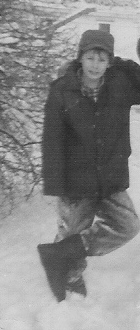
In my home territory of Atlantic Canada, the winter of 1962-1963 seemed the longest ever endured. That year, spectacular blizzards struck into late April. Particularly remembered was a storm of freezing rain immediately followed by bitter cold. For one bright day, the surrounding fields, where the snow froze into hard ice, were transformed into an undulating open skating rink. In late April, the receding of the snowbanks seemed to have been achieved as much by my intense urging as by the changing weather…
Two linked memories are especially recalled from that season:
On a windy afternoon in early May, I went to the nearby lake shore to see the open water newly freed from six months locked in ice. While there, I witnessed an older boy setting a patch of grass alight with a Zippo. The brush fire which ensued threatened to conflagrate the boathouses lining the cove. Fortunately, they were saved by the fire crew summoned by the railroad shop whistle (blown for fires as well as for train wrecks). Unfortunately, it was not the perpetrator who was seen fleeing the scene on his bike–– but me–– darting into the woods. In the schoolyard for days afterwards, I was teased and jeered as a “firebug.”
The following Friday afternoon, my father accompanied me to the same cove. He obviously knew about the fire but said nothing about it. I wondered whether he had also been falsely accused in boyhood… Happily, the embarrassment in showing my face at the lake again was soon dispelled. It was not only the start of fishing season–– but the white perch were biting. We caught more than a dozen.
Being among those villagers who regarded perch inedible, my father brought the fish home only as garden fertilizer for the coming season. Upon opening the trunk of the car, one perch was still flopping. With the idea of keeping it alive, I filled the washtub on the porch. When last checked for the night, the fish was still swimming.
The next morning, I awoke to falling snow. In the ice-skimmed washtub, the perch was floating belly up. Instead of immediately burying it in the flowerbed as my mother directed–– I was curious to know whether its body could be preserved. With thoughts of Egyptian mummies, I put it in an airtight jar before burial. I promised myself to wait a year before checking on its preservation. Typically impatient, I dug it up just eight days later.
In opening the unearthed jar, I was blasted by the stench of deliquesced flesh. In gagging horror, I realized that my own body would come to that same revolting state of decay. Years later, I wondered whether that was the moment in which the first seed of apostasy was germinated…
A few weeks thereafter, a village boy drowned. He had been fishing in a stream up the railroad tracks. We were the same age but he was much cleverer. I was haunted to have been spared. On the night after the boy’s funeral, a violent thunderstorm stuck like the pounding fist of Thor. I took it as a warning.
Then in late October, President Kennedy was assassinated. It was stunning that even the most powerful man in the world could be instantly struck down. Yet most ominous was the shadow of the nuclear mushroom cloud, looming since the Cuban Missile Crisis, a year before…
All that seems to culminate in a memory of creeping down the stairs soon after midnight on December 25th. I was anxious to find out whether the hoped for gift was under the tree. In that same moment, I was utterly convinced that that Xmas would be my last…

At Xmas 1963, I did receive the very gift I’d wished for: a Daisy BB gun. I quickly learned to hit bullseyes on paper targets. By the end of winter, I was growing bored with shooting at bottles. By late spring, I was turning that air gun on tiny animals.
It is of no consolation that the brutality of some little boys towards harmless creatures has been noted for time immemorial. One may recall the brutalized Earl of Gloucester in ‘King Lear’ howling out: ‘As flies to wanton boys are we to the gods––they kill us for their sport!’ Nasty boys in Elizabethan England were obviously known to pull the wings off flies. Yet even Shakespeare may have been shocked by my savagery at the age of thirteen…
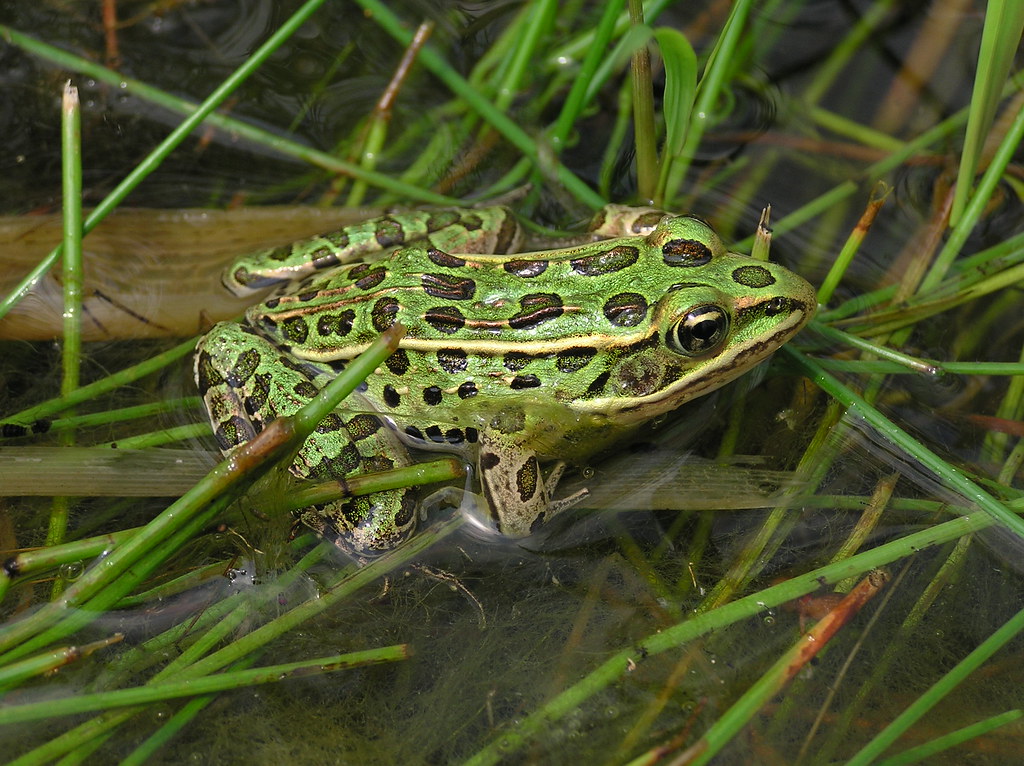
I shot little birds and killed snakes–– but frogs were my primary victims. I sometimes ‘hunted’ them alone, but a cousin my age was often a partner in depravity. We spent August afternoons slogging through marshes and combing long grass for our prey.
We did not stop at shooting frogs. When our BBs ran out, we bashed them with clubs. A few we captured alive and tormented before killing. Years later, in reading of a precipitous decline of the Leopard frog in North America, I was horrified to think that my prepubescent massacre of the defenceless creatures could factor into a species extinction…

Many hours have been given to self-tormenting speculation about the root causes of the savagery of my cousin and I:
While our cruelty was inexcusable, it is not irrelevant to note that the early 1960s was less than a generation away from WWII. Most boys of the era reveled in war comics and boasted about their father’s battle exploits. In our killing expeditions, my cousin and I often referred to frogs as “Krauts” or “Japs…” Our parents knew about our ravages but did not seem bothered. It would probably have been far more disturbing for them had we played with dolls…
Although airguns tended to be regarded as toys for practice handling of a real gun–– I was initially proud to be trusted with one. It even came with a warning that carelessly shot BBs could put out eyes… I also took pride in my accuracy. Drawing a bead on a frog camouflaged in tall grass felt like sharp shooting. Yet within the hunting culture of the territory, frogs were not fair ‘game’ nor shooting them a ‘sport.’ Their targeting was rather an insecure boy’s imagined wielding of ruthless domination…
As for my particular vulnerabilities: unlike my cousin, I was small for my age, uninterested in group activities and unsuited for most team sports. Not the least to be factored was my coming to terms with the absence of most of a right arm. Yet even in a blue-collar village with a “tough end”, I was not bullied. A sharp tongue seemed to provide most of the defense needed. Perhaps my pursuit of notoriety in frog-killing was an attempt to appear reckless and wild.
More jarringly, I wonder whether frogs were my primary victims due to their resemblance to humans in miniature. I had no desire to terrorize creatures larger than frogs–- but my war on little amphibians and birds could easily have spiraled out of control. Indeed, the correlation of animal torture in childhood with monstrous criminality in adulthood is well documented. Mercifully, around the onset of adolescence, my sadistic impulses were seemingly extinguished.
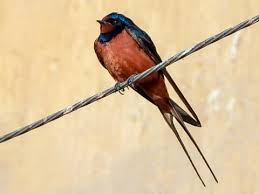
On a May afternoon a few months before turning fourteen, I was sitting on my front steps taking shots at a bottle in the dooryard. The BB gun felt smaller than when last handled, the previous fall. Suddenly, a barn swallow lit on the clothesline. Without thinking, I pivoted the barrel and fired. The swallow dropped to the ground. No sooner had its fluttering stilled when another swallow swooped down over the lifeless body. It made several swoops before landing on the same clothesline directly above the dead swallow. Plainly, it was the mate.
I had shot several little birds in the dooryard over the previous two years but had never seen such a reaction. Frightened by the mate’s distress, I impulsively turned the gun on it. After it fell dead, I jumped down from the steps and touched the warm feathers.
Crouching there, it struck me that its chicks would not hatch in the nest it had probably already prepared. Because of my squeeze of a trigger, generations of swallows had lost the chance to exist. I closed my eyes in the welling up of unfamiliar emotion. For the first time I realized I had destructively disturbed the universe. Sobbing, I vowed to never wantonly kill again…

I would like to believe that that was my first awareness of the ecological interconnectedness of all living things. At least that is how the event is enshrined in memory. Whether it occurred exactly as remembered–– or so dramatically changed my heart––is uncertain. Soon afterwards, I did give the BB gun to a younger cousin. If nothing else, I had outgrown it. Meanwhile, with the onset of adolescence, attention had turned to more interesting pursuits…
My ‘dooryard epiphany’ did not immediately end my interest in hunting. That fall, I got a bird licence. Over the following two Octobers, I shot several partridges with my father’s 16-gauge shotgun. Yet those birds were taken as real game and afterwards served up at table. Unlike a few friends, I did not ‘advance’ to hunting deer with a rifle. By the age of sixteen, I had no more interest in proving I could handle a gun…
As for my former accomplice in ranacide–– from the onset of our adolescence my cousin and I grew apart. We came to an unspoken understanding that we were dangerous together. After the middle 1960s, our paths even more sharply diverged. I gravitated to a small cohort of fellow ‘freaks’ while he wore his hair short and kept to himself. He got to college a year before me but dropped out in his first year. For that failing, like a Thomas Hardy character, he punished himself thereafter.
He stayed on in the village, drinking heavily while wearing himself down in heavy low-paid work… We did not keep in touch but a few years ago I heard that his son had taken his own life. I wrote in condolence knowing he would not reply… I have always wondered whether my cousin paid more than his share of our mutual karmic debt…
Several times over the decades, he has appeared in a recurrent dream. The settings vary––but a pervasive dread is common to all. In one version, bones of a corpse secretly buried decades ago have finally been dug up and identified. My cousin and I are linked to the murder. As the police close in on us, we wait breathlessly for the knock on the door…
I like to remind myself that my sadistic phase lasted only about two years. I also take a little comfort that one’s cells are constantly regenerated. By one account, the entire body is replaced every seven years. If true, that ensures a ten-fold removal of my present brain/body from that of the 13-year-old frog killer…
Today I cannot bear to eat the flesh of animals, apart from that of fish. In awareness of the sentience of even the tiniest creatures, I pick up spiders in tissues for safe removal from the house. I instruct my grandchildren to lift worms from sidewalks and drop them unharmed in the grass…
Yet undeniably, as Wordsworth puts it: ‘the Child is father of the Man.’ It is uncertain as to which aspects of the child may persist. My question is: Have any traces of the sadistic boy been manifested in my behaviour through adulthood? I have definitely been redeemed of the slightest inclination to harm a frog. But what of my treatment of fellow human beings? While spared a descent into sociopathic criminality, I know that my lifetime record precludes ‘he was remarkably kind, warm and unselfish’ as an appropriate epitaph…
Then there is the karmic debt. Is it ever paid in full?
I recognize the clear distinction between harmful guilt and healthy regret. Plainly, the shame conferred by self-centered guilt is as toxic as it is pointless. Yet that understanding has not fully eliminated self-torment over my prepubescent savagery. A Buddhistic approach, as roughly understood, is to accept regret as the spur to corrective action–– without attaching shame to one’s identity. Even in my septuagenarian years, I am working on the thorough application of this wisdom…
Still, there is appreciation of the capacity to reflect upon–– rather than deflect from––subjects of such personal vulnerability. That ability is in keeping with the reflective ‘third age’ of the relationship with the natural world, according to Wordsworth. While the ‘shades of the prison-house’ have been long drawn over the ‘celestial light,’ there is the consolation of hearing the ‘still, sad music of humanity…’ At the same time there is the gain of refinement over crudity and restraint over impulsiveness.
As for awareness in the moment: the geriatric mind/body tends to oscillate between the relative clarity of good days and the fogginess of awful ones. It is distracted by stiffness and aches. It often despairs of growing ever dimmer. Yet even with the loss of its youthful intensity–– the elderly mind is usually a more comfortable fit than that of its savage phase…
-2026, May


Leave a Reply